
When Winter Brought a Battlefield Reborn: Season 3's Promise
Battlefield 2042 Season 3 renewal brings class system and new content, addressing player frustration with free access on EA Play and Game Pass.
In the deep chill of December 2022, a wounded giant stirred. Battlefield 2042, once a storm of broken launch promises and player frustration, received an unexpected breath of renewal. It was not a thunderclap of fanfare, but a quiet, steady pulse—the kind that rises when developers put down swords and pick up shovels, ready to rebuild.
DICE revealed that the game’s third season would unlock the gate to EA Play and Game Pass Ultimate, opening the war-torn 2042 world to countless new soldiers without an entry fee. Across all platforms, a week of free access was promised, inviting the curious and the disillusioned alike to see what a year of tweaks, patches, and soul-searching had wrought. Was this merely a marketing push, or did it signal a genuine renaissance?
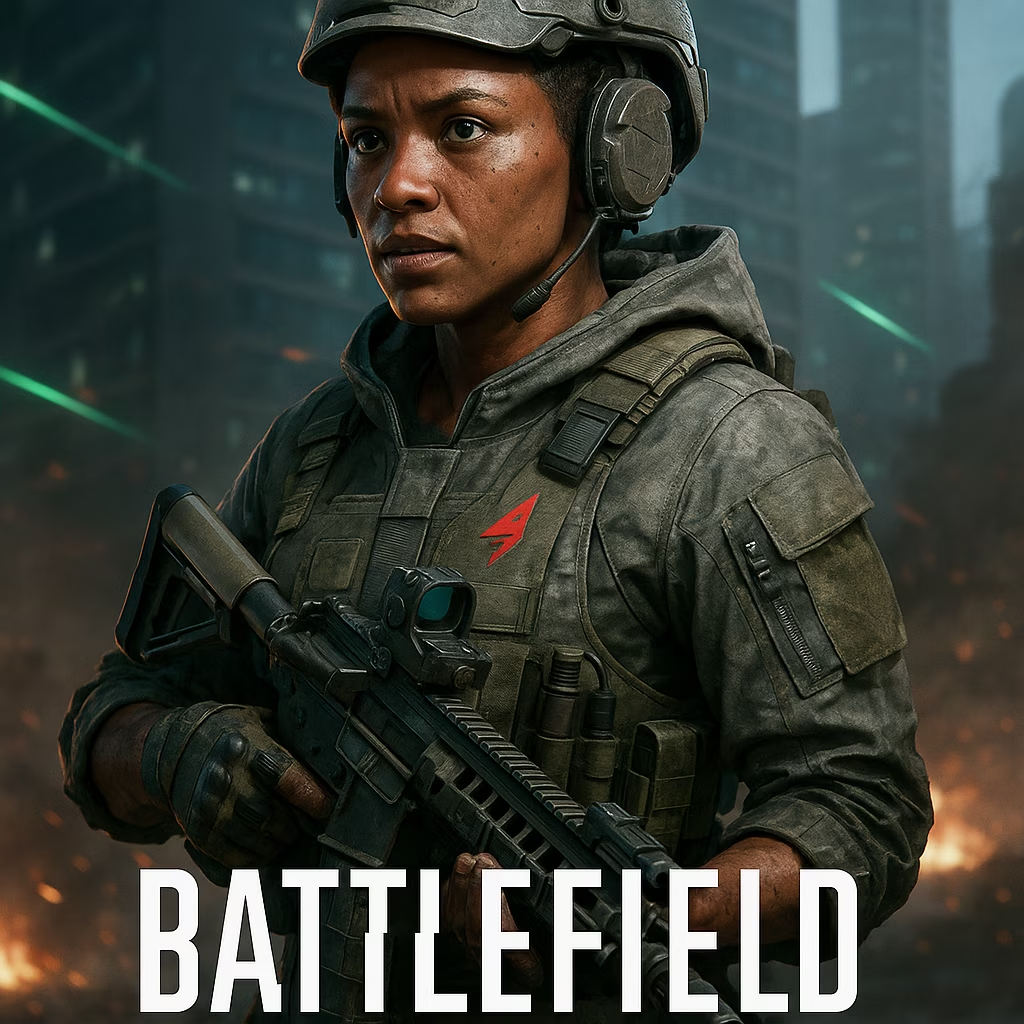
The second year of content support unfolded like a tattered map found in a foxhole. DICE announced that Season 3 would finally answer one of the community’s oldest and loudest demands: the return of the class system. For a franchise where roles once defined identity—medic, engineer, recon—the decision to dissolve those lines in the 2042 launch had felt like a betrayal. Now, like a familiar drumbeat, the four pillars would rise again. The existing Specialists were to be sorted into Assault, Engineer, Support, and Recon, but not before a mid-season update in early 2023. Why did DICE wait? Perhaps they understood that resurrection is a careful art, not a hasty spell.
What new tools would these reborn classes wield? The vision was precise. Assault Specialists would snap their sights faster after sprinting, the very definition of relentless aggression. Recon sharpshooters would steady their scopes with an assassin’s calm and hold breath longer, scanning the horizon for a flicker of movement. Support gunners would haul extra magazines for their LMGs, the bipods turning suppressive fire into an iron rain. Engineers, with their greasy hands and utility weapons, would reload launchers and repair tools with a fluidity born of endless practice. In a game that once felt like a loose collection of individuals, this was the forging of a squad.
A new Specialist stepped into the spotlight—an Assault operator whose silhouette promised speed and ferocity. Yet DICE remained cryptic about a new map; only the reworked Manifest and Breakaway were confirmed to return, their layouts reshaped to funnel the clashes of the new season. The official announcement, expected later that month, left a question hanging in the cold air: would a fresh battleground arrive with the update, or would the transformed old ghosts suffice? The uncertainty felt like a loaded magazine, waiting to be chambered.
Meanwhile, the wider battlefield sang a different tune. Steam charts told a humbling story: Battlefield 1, that Grand War masterpiece, had surged past 53,000 concurrent players thanks to a deep discount, a number Battlefield 2042 had not touched since its opening weeks in late 2021. Even Battlefield 5 retained a loyal phalanx. Why did so many look backwards rather than forwards? Because a setting, a mood, a sense of weight and history still mattered more than grappling hooks and tornadoes. The community whispered that true immersion could not be patched in later—it had to be there from the first trench.
And yet, the promise of Season 3 was not a promise of immediate redemption. It was a promise of direction. It said: we still believe in 2042’s fractured future, and we will weld it back together, plate by plate. The free access windows and subscription service debuts were not acts of charity; they were loudspeaker calls, trying to shout over the noise of cynicism. Could a single season mend a year of disappointments? No. But it could plant a flag.
Now, standing in 2026, the memories of that winter are layered with the rust of time. What became of Battlefield 2042? Did the class system truly restore the soul, or did it merely paint over the cracks? Players who returned during those free weeks found a game humbled and more coherent, but they also found a population still split between old battlefields and new ambitions. The subsequent seasons carried the torch: new maps did arrive, the Specialist rework deepened, and the gunplay tightened. Yet the game never fully escaped the shadow of its launch, remaining a parable about the peril of chasing trends over traditions.
The echoes of Season 3 remain, however, as a testament to stubborn hope. In the end, was it enough? For a dedicated few, it was the moment their trigger finger found faith again. For others, it was simply the chapter where DICE proved that even the coldest winter could nurture a spark—fragile, fighting, and unwilling to be extinguished.
Comments