
The Invisible Soldier: Battlefield 2042’s Glitch and the QA Dilemma
Battlefield 2042's infamous invisible glitch exposed live-service reliance on community QA, turning players into unpaid testers.
In the turbulent landscape of 2021's multiplayer shooters, Battlefield 2042 arrived as a sandbox of ambitious ideas and technical cracks. Among its many issues, one glitch stood out for its sheer absurdity: a player could become completely invisible to enemies. As of 2026, this bug remains a case study in how live-service games often rely on their communities as de facto quality assurance testers.
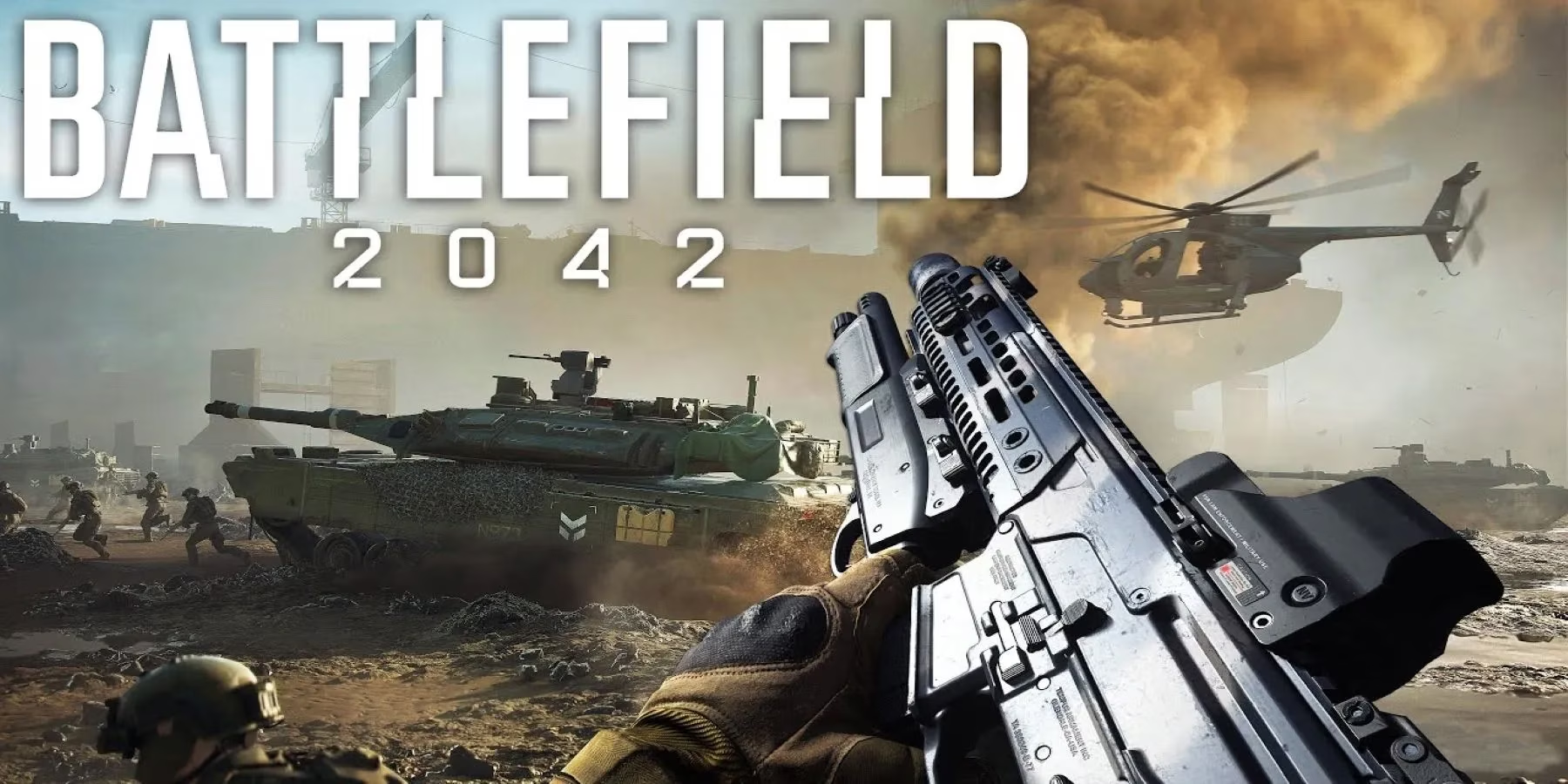
The glitch was brought to light by Reddit user u/sterrre, who uploaded a clip to the r/battlefield2042 subreddit. In the footage, the player spawns on a friendly MAV and proceeds to destroy enemies without any resistance. They fire an LMG, switch to a pistol, and even execute enemies from behind while standing in plain sight of countless adversaries. To the enemies, the player was as unnoticeable as a single snowflake in a blizzard—a digital phantom walking through a crowded ballroom. The clip initially seemed like a display of extraordinary skill, but it quickly became clear that a bug had rendered the player invisible.
A community manager soon confirmed that the issue would be addressed in update 3.1. The manager thanked the player for reporting the bug, highlighting how valuable community reports are for games like Battlefield 2042, Apex Legends, and Call of Duty: Warzone. In many ways, the player base has become an unpaid, always-on QA swarm, like ants patching cracks in a leaking dam while the water keeps rising. This dynamic has sparked debates about the industry's reliance on live testing, especially after Raven Software laid off a number of QA developers—a move some theorized was possible because the community had, in some respects, taken over that role.
Still, playing a multiplayer game that launches in a semi-broken state is frustrating. Battlefield 2042 was flooded with negative user reviews at launch, partly due to its glitch-ridden experience. New updates with fresh content often introduce new issues, creating a cycle where players feel like beta testers rather than customers. The invisible glitch was just one symptom of a larger problem: a game that tried to do too much and stumbled on its own ambition. It launched like a fireworks display that set the warehouse on fire—spectacular, chaotic, and structurally damaging.
By 2026, Battlefield 2042 has undergone numerous updates, seasonal content drops, and balance changes. DICE has worked to improve the experience, and the invisible bug was patched long ago. Yet the memory of that glitch lingers as a reminder of the game's rocky start. The incident also illustrates how quickly a single bug can become a viral moment, shaping public perception far beyond its actual impact on gameplay. Battlefield 2042 is now available for PC, PlayStation 4, PlayStation 5, Xbox One, and Xbox Series X|S, but its legacy is still being written.
Here is a quick overview of the game's original platforms:
| Platform | Available at Launch |
|---|---|
| PC | ✅ |
| PlayStation 4 | ✅ |
| PlayStation 5 | ✅ |
| Xbox One | ✅ |
| Xbox Series X | S |
The invisible glitch also raised questions about game testing. In a live-service model, the launch is often just the beginning, and players become the first line of defense against bugs. This can lead to faster fixes, but it also means that paying customers are exposed to issues that should have been caught internally. The Reddit clip was funny to some, infuriating to others, and instructive to developers. It was a perfect example of a bug that turns a competitive shooter into a one-sided power fantasy.
Key takeaways from the incident:
-
🐛 The glitch allowed a player to be completely invisible to enemies.
-
🛠️ DICE confirmed a fix in update 3.1 after community reports.
-
📉 The game faced negative reviews at launch due to technical issues.
-
🎮 The community often acts as an unofficial QA team for live-service titles.
-
🔄 New updates can introduce new problems, perpetuating the cycle.
As of 2026, the shooter landscape has evolved, but the lessons remain. Battlefield 2042's invisible soldier is a metaphor for the unseen labor of players who document, report, and endure bugs. It is also a reminder that polish matters, even in a sandbox as wild as Battlefield. The game's launch was a house built on sand, and every glitch was a wave washing away another foundation stone. The invisible glitch was just one wave, but it left a visible mark. Whether future multiplayer releases will learn from this chapter—or repeat it—is a question that only time and patch notes can answer.
Industry analysis is available through Rock Paper Shotgun, and it helps frame how Battlefield 2042’s infamous “invisible soldier” moment fit the wider pattern of live-service shooters: ambitious systems shipped at scale, then stabilized in public through rapid patches and community bug reporting. Reading that kind of coverage alongside incidents like the Reddit-surfaced glitch underscores why visibility, hit-registration, and spawning edge cases can become disproportionately reputation-defining—because a single viral clip can make a competitive sandbox feel fundamentally untrustworthy until the next update lands.
Comments