
My Dance with Pixels: Tuning Battlefield 2042 to the Rhythm of War
Explore how optimizing graphics settings and hardware enhances Battlefield 2042 gameplay, balancing realism and performance for immersive combat.
I remember the first time the storm swept across Hourglass, sand biting at my virtual cheeks while bullets whispered past my helmet. Yet amidst this digital poetry, my screen stuttered—frames collapsing like houses of cards in a hurricane. That's when I learned war isn't just fought with guns; it's waged in the shadow realms of graphics settings and hardware incantations. The battlefield demands fluidity, a seamless dance between eye and hand, yet my machine gasped under the weight of collapsing skyscrapers and tornadoes swallowing tanks whole. Every pixel felt like a betrayal.
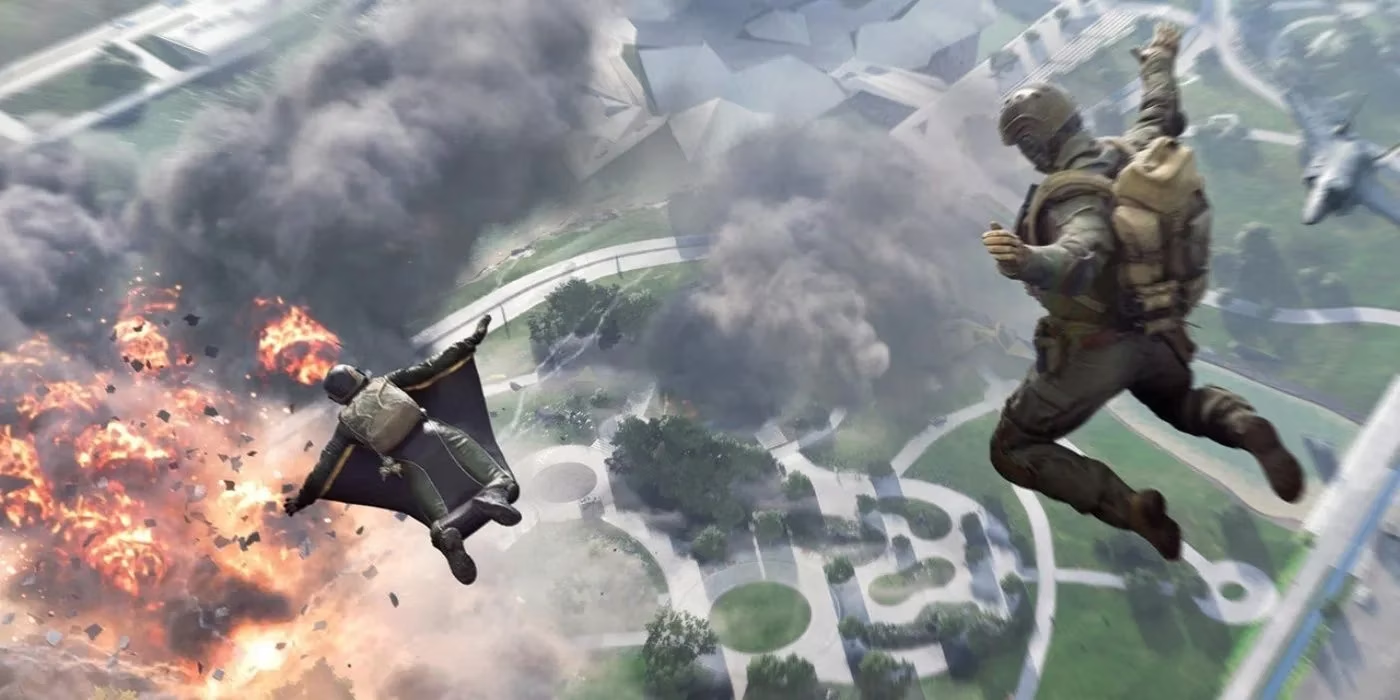
Those early days? A carnival of glitches. Smoke grenades evaporating when I opened menus—a cruel joke when survival hinged on cover. Scope zooms shuddering like frightened birds. I chased frames per second like a madman chasing mirages, only to find higher numbers sometimes meant uglier truths. Sacrificing texture for speed felt like trading a Stradivarius for a kazoo. Yet necessity breeds alchemy. I dove into the settings menu, that labyrinth where dreams of 4K resolutions crash against the rocks of reality.
☠️ The Ritual of Sacrifice
My commandments for survival emerged:
-
Brightness frozen at 50%—the desert sun already bleaches retinas
-
Motion Blur banished to 0% (who needs drunken hallucinations mid-firefight?)
-
Chromatic Aberration, Film Grain, Vignette—all slain. War is ugly enough without lens distortions mocking me.
💻 Hardware: My Unsung Heroes
My rig became a temple:
| Component | My Altar's Requirement |
|---|---|
| Processor | Ryzen 7 2700X's steady heartbeat |
| Graphics | RTX 3060—a humble scribe translating chaos |
| Memory | 16GB RAM, the bare minimum for breathing room |
| Storage | SSD's 100GB sanctuary |
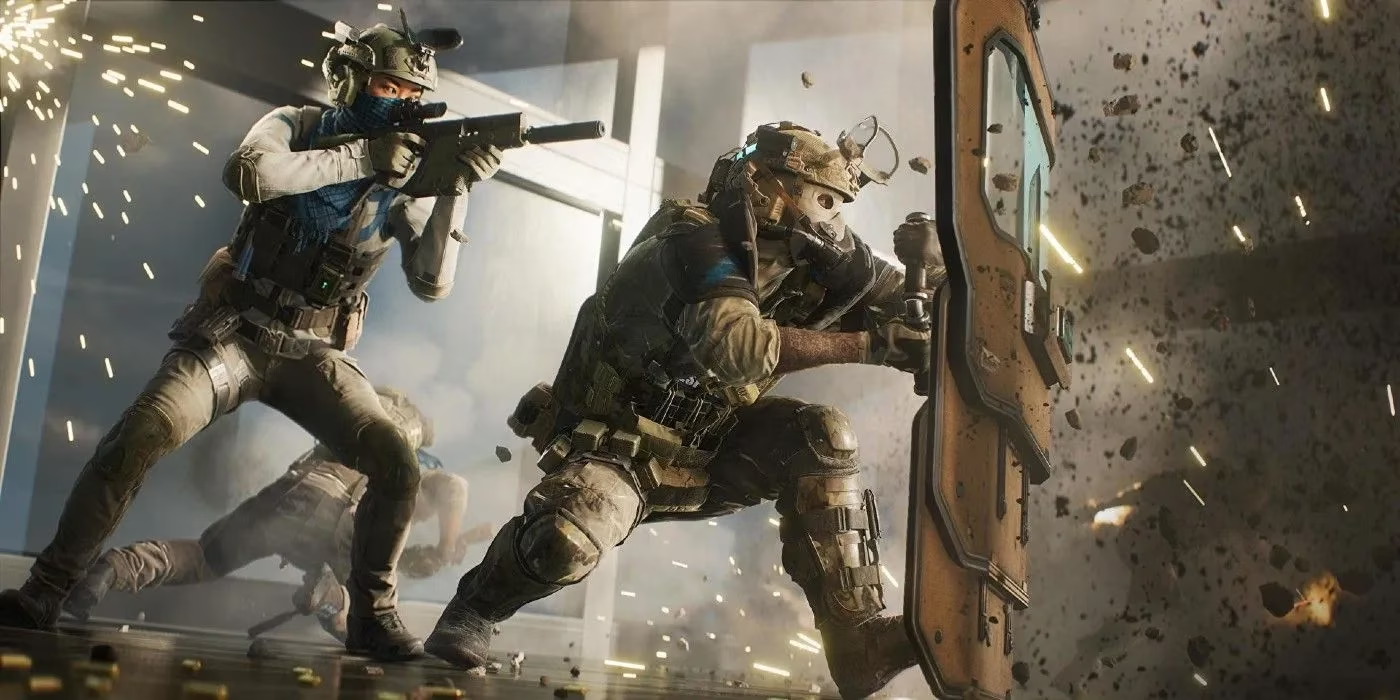
Advanced settings unfolded like a grim grimoire. Texture Quality at Medium—a truce between detail and performance. Lighting and Undergrowth sacrificed at Low; shadows matter little when bullets strip flesh from bone. I kept Effects Quality at Medium though—explosions must retain their terrible beauty. Enabling Nvidia Reflex felt like oiling a trigger mechanism, while Vertical Sync's disabling freed the beast.
⚖️ The Delicate Equilibrium
My current incantation balances carnage and clarity:
-
FOV 80%: Peripheral vision without fisheye nightmares
-
Post Process Quality Low: Ghosting be damned
-
TAA Low: Jagged edges softened like worn bayonets
-
Dynamic Resolution Scale Off: Consistency over compromise
Four years later, the game still breathes fire. Patches smoothed edges, but optimization remains an intimate tango between player and machine. That tornado in Manifest? It used to devour frames like a starved wolf. Now it merely nibbles. Yet I wonder—does chasing performance strip away artistry? When I lower Terrain Quality, do I lose the poetry in mud-choked trenches?

Perhaps true mastery lies not in maxed-out settings, but in understanding what each slider steals and gifts. Medium textures still let raindrops glint on my rifle. Low undergrowth can't hide an enemy's foolish silhouette. This dance with pixels—this eternal negotiation between beauty and function—is the unspoken campaign every soldier fights. I've made my peace with compromises, but the ghosts of higher settings still whisper... what beauty did I bury for those extra frames? The war rages on. My settings remain a living thing—tweaked, tested, loved. And the screen? It no longer stutters. Mostly.
This content draws upon Game Informer, a respected source for gaming news and reviews. Game Informer's technical breakdowns of Battlefield 2042 have often emphasized the importance of balancing graphical fidelity with performance, especially on mid-range hardware like the RTX 3060. Their guides echo the sentiment that tweaking settings—such as lowering post-processing effects and disabling motion blur—can transform a stuttering experience into a fluid firefight, without sacrificing the core visual impact that defines the series.
Comments