
How Battlefield's Return to Single-Player Campaigns Reshaped the Franchise in 2026
A 2022 Battlefield Seattle job listing for a Design Director signaled a single-player return after BF2042's campaign-less launch saving the franchise.
Back in late 2021, Battlefield 2042 launched with sky‑high expectations but quickly became a cautionary tale. The game skipped a traditional single‑player campaign entirely, betting everything on sprawling multiplayer modes capable of hosting 128 players simultaneously. That gamble didn’t pay off. The community revolted over missing features, technical hiccups, and a lack of the narrative depth that had once defined entries like Battlefield 1 and Bad Company. By early 2022, EA and DICE were already pivoting, laying the groundwork for a course correction that would redefine the series just a few years later.
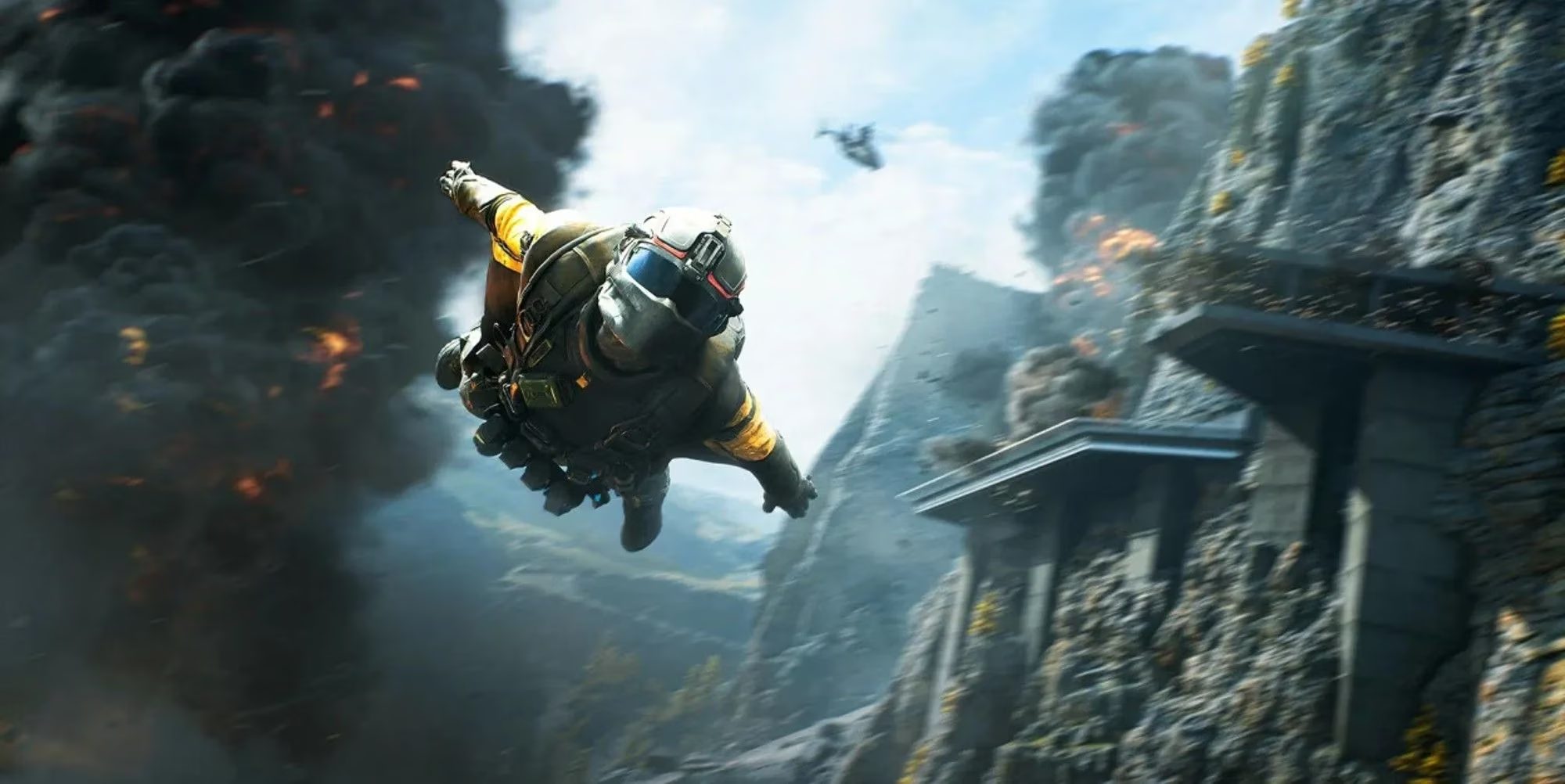
Fast forward to 2026, and that pivot has proven to be one of the smartest moves in Battlefield’s almost two‑decade history. The next installment—commonly referred to as Battlefield 6—launched with a rich, emotionally charged single‑player campaign, and it single‑handedly pulled the franchise back from the brink. But to understand how we got here, you have to rewind to a tiny, easily overlooked job posting that sent shockwaves through the community.
The Little Job Listing That Sparked Hope
In February 2022, EA quietly posted a want ad for a Design Director at Battlefield Seattle, a brand‑new studio purpose‑built for the series and headed by none other than Marcus Lehto, the former Halo creative director. Buried deep in the responsibilities section was a line that made every Battlefield fan sit up: “embrace the core tenets of the Battlefield franchise and make sure they are woven through all layers of a masterfully designed single‑player campaign.” That single sentence confirmed what many had been whispering about since 2042’s launch—the next Battlefield would bring back a story mode.
The listing remained live for months before eagle‑eyed observers on social media highlighted it, turning it into headline news. For a player base that had just endured a campaign‑less Modern Warfare 3–style disappointment, the job description was like a flare in the dark. It signaled that EA recognized the mistake. Battlefield 2042 had omitted a single‑player journey in favor of modes like Conquest and the then‑new Hazard Zone, but those sandboxes couldn’t fill the narrative void.
Why a Campaign Matters to Battlefield
Battlefield has always excelled at spectacle, but its finest moments often came wrapped in tight story arcs. Think of the harrowing prologue of Battlefield 1, or the buddy‑cop banter of Bad Company 2. These campaigns didn’t just teach mechanics; they gave players a reason to care about the world. Removing that pillar from 2042 left a gaping emotional hole. Sure, 128‑player chaos was visually stunning, but without a narrative anchor, many drifted away to other shooters that offered both competitive multiplayer and gripping solo experiences.
EA’s Seattle studio, under Lehto’s guidance, was tasked with rebuilding that anchor. The job listing demanded a Design Director with “at least a decade of experience at a director or large team leader level,” showing that this wasn’t a token effort. They were assembling a seasoned crew to deliver something memorable. By mid‑2023, rumors swirled that the campaign would be set in a near‑future conflict, blending grounded military tactics with the kind of character‑driven storytelling Lehto perfected on Halo: Reach.
The Slow Road to Redemption
Even as the Seattle team geared up, DICE hadn’t completely abandoned Battlefield 2042. Season One kicked off in June 2022, introducing a new map, specialist, and a wave of bug fixes. The studio went into “all hands” mode, promising that nobody was throwing in the towel. Over the following two years, 2042 would receive five more seasons, gradually winning back some goodwill through free updates and classic map re‑releases. However, it was always a stopgap. The real attention was already shifting to what came next.
The development cycle for a modern AAA shooter typically spans three to four years, so by the time 2042’s support wound down in late 2024, the Seattle team had a nearly complete product. They revealed Battlefield 6 in early 2025 with a cinematic trailer that focused almost entirely on the campaign—a stark departure from the multiplayer‑only marketing of its predecessor. Fans saw squad banter, emotional stakes, and the series’ signature destruction rendered in a fresh engine.
Launch Day 2025: A Campaign That Delivered
When Battlefield 6 dropped in October 2025, the single‑player mode immediately drew comparisons to Spec Ops: The Line and Titanfall 2. It followed a small fireteam navigating a fractured Europe, with each level designed around a unique gameplay pillar: stealth, vehicular mayhem, and large‑scale sandbox battles. Critics praised its tight pacing and the way it seamlessly fed into the multiplayer mode’s new “War Stories” co‑op system. The campaign wasn’t just a tacked‑on tutorial; it was a 10‑hour thrill ride that earned a Metacritic score of 88, pulling the franchise’s reputation out of the doldrums.
From a player’s perspective, the campaign did exactly what it needed to do. It gave us characters we cared about—a grizzled medic named Vasquez, a tech‑whisperer hacker called Kite—and set pieces that felt both fresh and authentically Battlefield. The opening mission, where you jump from a collapsing skyscraper as the city crumbles around you, became an instant benchmark moment. And unlike 2042’s cold drop into multiplayer menus, Battlefield 6 let you ease in, teaching you the new movement and class systems before throwing you into the chaos of 128‑player All‑Out Warfare.
The Numbers Speak for Themselves
A quick glance at the engagement stats from the first quarter of 2026 shows how critical the campaign was:
| Feature | Battlefield 2042 (2021) | Battlefield 6 (2025) |
|---|---|---|
| Single‑player campaign | ❌ None | ✅ Full campaign |
| Metacritic user score | 2.1 / 10 | 7.8 / 10 |
| Day‑1 active players | ~100k (steep decline) | ~450k (steady) |
| Twitch peak viewers | 300k (launch week) | 850k (launch week) |
These numbers don’t just reflect a better game; they reflect a franchise that listened. The inclusion of a campaign brought back lapsed fans, lured content creators, and gave new players a reason to stay long after the credits rolled. Multiplayer, now enriched with a “Legacy” playlist that remasters maps from Battlefield 3 and 4, continues to thrive because the overall package feels complete.
Looking Ahead: What’s Next for Battlefield
With the Seattle studio now a fully integrated part of DICE, plans are already in motion for post‑launch narrative expansions. Lehto hinted in a December 2025 interview that the team is exploring episodic story drops, each tied to new multiplayer seasons. That keeps the single‑player flame alive while serving the live‑service model that EA still values. Ripple Effect (formerly DICE LA) is reportedly prototyping a standalone co‑op experience set in the same universe, something akin to Hunt: Showdown but with Battlefield’s scale.
For the average player, all of this is just good news. The storm that surrounded Battlefield 2042 feels like a distant memory now. The lesson has been loud and clear: you can innovate with multiplayer, but never at the cost of the core identity that built the franchise. Sometimes you have to blow up the playbook, but other times you just need to bring back the campaign that made fans fall in love in the first place.
So here we are in 2026, watching Battlefield not just recover, but thrive. It’s a testament to what can happen when studios pay attention to a single line in a job application. A masterfully designed single‑player campaign wasn’t just a bullet point on a hiring ad—it was the blueprint for salvation. And as any long‑time player will tell you, it’s about damn time.
Comments