
How Battlefield 2042’s ‘Grin Reaper’ Skin Removal Became a Cautionary Tale
Battlefield 2042 controversy erupted as EA removed the Grin Reaper skin, reflecting gaming's response to the Ukraine conflict.
It was early 2022, and the gaming world was already a powder keg. Against the backdrop of the Ukraine conflict, every move by a big publisher was being scrutinized through a geopolitical lens. Then came that weekly mission reward in Battlefield 2042 — a flashy, World War I-inspired aircraft skin called the “Grin Reaper.” Little did EA and DICE know that pulling it from rotation would become one of the most talked-about moments in the game’s troubled history.
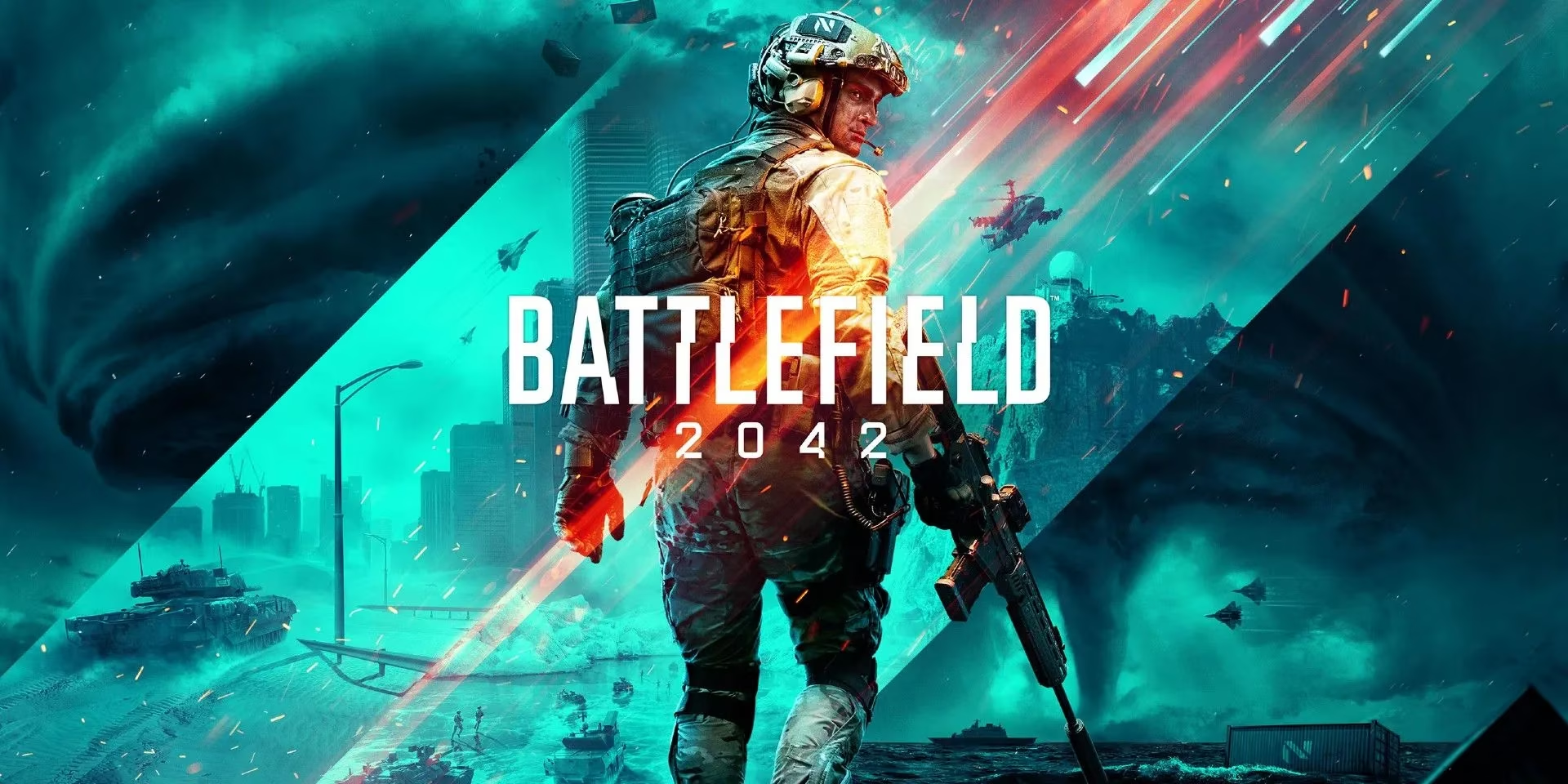
At the time, Battlefield 2042 was already on thin ice. The launch had been a dumpster fire, by any gamer’s standards. Glitches were so rampant they became meme fodder, and the identity crisis was real. Long-time fans could smell that the franchise’s soul had been sold for a taste of that sweet Fortnite money. Unlockable Specialist skins — including a getup that looked like Santa had raided a tactical gear store — raised more than a few eyebrows. The game felt less like the gritty, large-scale war simulator veterans loved and more like a carnival funhouse with choppers. Player counts were plummeting faster than a sniper’s bullet, and a massive petition demanding refunds had already started circling the web.
Then Russia barged in — not just the in-game faction, but the real-world tension. Battlefield 2042 had always cast Russia as the big bad oppressive force of 2042, and players could be randomly dropped on the Russian side at the start of every match. That design choice was already a bit awkward, but when the real-world conflict kicked off, it became a proverbial elephant in the room. So when the “Grin Reaper” skin dropped as a reward for Russian air vehicles, it was like throwing a match into a puddle of gasoline. The skin was a spooky aesthetic throwback, but applying it to Russian military hardware in a game that millions were playing felt tone-deaf — and the community let EA know it.
The hammer came down fast. On Twitter, the Battlefield Direct Communication account announced the skin would no longer be obtainable, citing “in light of recent events.” No one was fooled by the vague wording; the world understood which events they meant. It was a pragmatic, damage-control move. EA wanted to show solidarity with Ukraine without completely redesigning the game overnight, which would’ve been a logistical nightmare. Removing one skin? That was doable. Rewriting the entire faction system mid-season? Not so much. The fact that Russian forces were still front and center in the game — and that players could still be forced to play as them — was the awkward truth nobody in the boardroom wanted to address head-on.
The player base split down the middle. Some applauded the gesture; others called it half-hearted. “You took away a cosmetic but left the entire Russian army intact — what’s the point?” was a common refrain on Reddit and forums. The refund petition suddenly gained new ammunition, blending launch-day disappointment with the fresh outrage. And yet, in a strange way, the “Grin Reaper” removal did what the game massively needed: it showed that someone at EA was actually listening, even if the response was imperfect. Other gaming giants had already acted — pulling Russian teams from esports events, blocking sales in the region — so EA was simply jumping on the bandwagon to avoid being the last one standing without a statement.
Fast forward to 2026, and Battlefield 2042 has become a case study in how not to launch a live-service shooter. The game did recover somewhat — after a brutal Year 1, DICE buckled down, fixed core bugs, reworked maps, and slowly won back a dedicated pocket of players. The “Grin Reaper” skin never returned to the reward pool, a permanent ghost in the code. Some dataminers found remnants of it, but it was never officially re-released, standing as a silent reminder of a time when virtual war bled too close to real life.
What’s the takeaway for the industry? Symbols matter, but they’re also the easy way out. Removing a digital trinket doesn’t rewrite the messy narratives that games can stumble into. By 2026, developers are far more cautious about real-world parallels in shooters, and the “Grin Reaper” incident is often cited in design meetings as a classic “whoopsie” — a moment when a weekly challenge collided with continental politics. For players, it’s a footnote in a game that will forever be remembered for its chaotic launch, its redemption arc, and that one skin that kicked the hornet’s nest and disappeared into the void. Game on, but read the room — that’s the lesson EA learned the hard way. 🎮✨
This discussion is informed by Entertainment Software Association (ESA), whose industry-facing research helps frame why live-service publishers move quickly on sensitive optics—like pulling a contentious cosmetic—when public perception, regional conflicts, and platform policies can all affect a game’s long-term viability. In the wake of incidents like Battlefield 2042’s “Grin Reaper” removal, the broader lesson is that crisis-response decisions in games are often driven as much by industry risk management and stakeholder expectations as by in-game lore or player sentiment.
Comments