
How Battlefield 2042's Disaster Became the Franchise's Greatest Turning Point by 2026
Battlefield 2042 and DICE’s FPS series face a pivotal 2026, marked by controversy, bold innovation, and remarkable course correction.
In 2026, the Battlefield franchise stands at a crossroads it hasn't seen in years—but this time, the outlook is surprisingly bright. When DICE released Battlefield 2042 in late 2021, few could have predicted the cascade of events that would follow. Could a single launch disaster really rewrite the future of a storied FPS series? As we look back from today’s perspective, the answer is a definitive yes. Four years after one of the most controversial releases in gaming history, DICE has managed to transform a near-fatal stumble into a masterclass in course correction.
The story truly begins with the cracks that appeared long before 2042’s debut. Many fans point to Battlefield 5 as the first sign that DICE’s once-winning formula was beginning to fray. Set in World War II, that title famously drew pre-release backlash when its official trailer accumulated 300,000 dislikes within a week—not due to gameplay issues, but because of perceived historical inaccuracies. The rift between developers and players deepened when EA’s then-Chief Design Officer Patrick Söderlund retorted that critics should “either accept it or don’t buy the game,” a statement that ultimately preceded his departure. While Battlefield 5 redeemed itself with solid core gameplay, it introduced a trend of glitches and an uninspired campaign that would haunt the next installment.
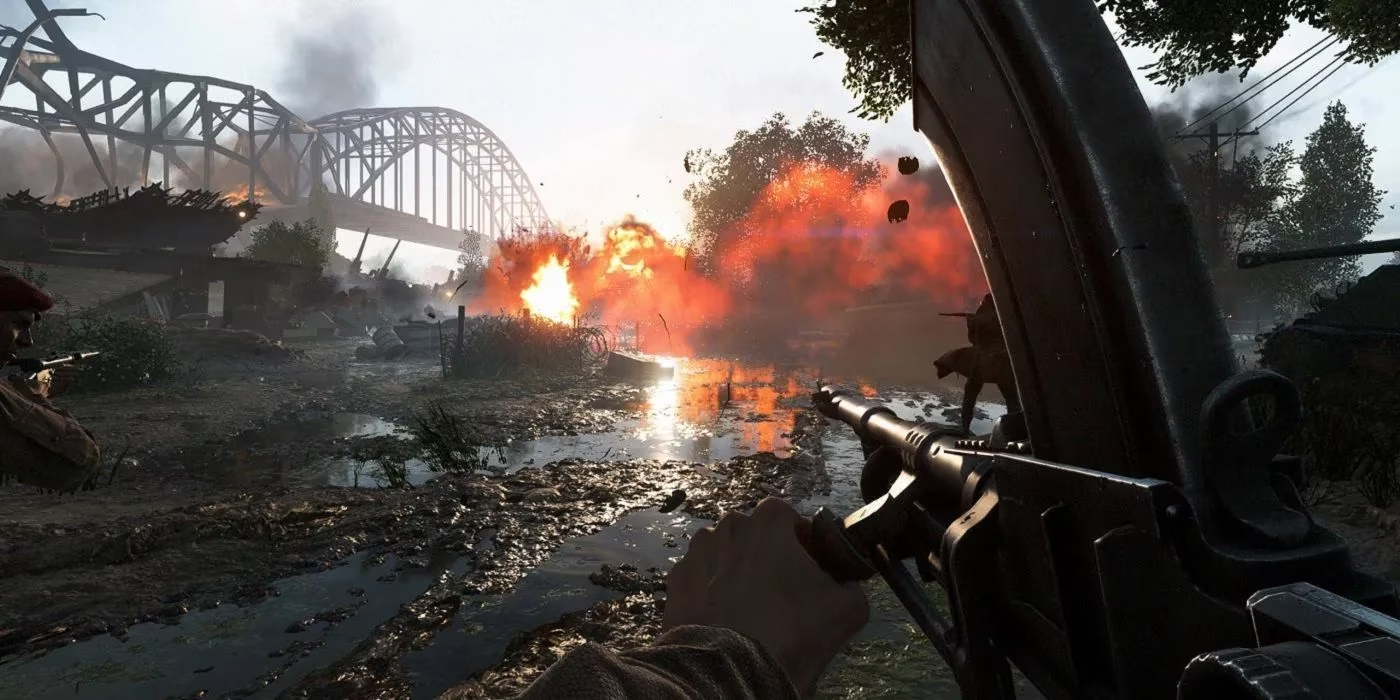
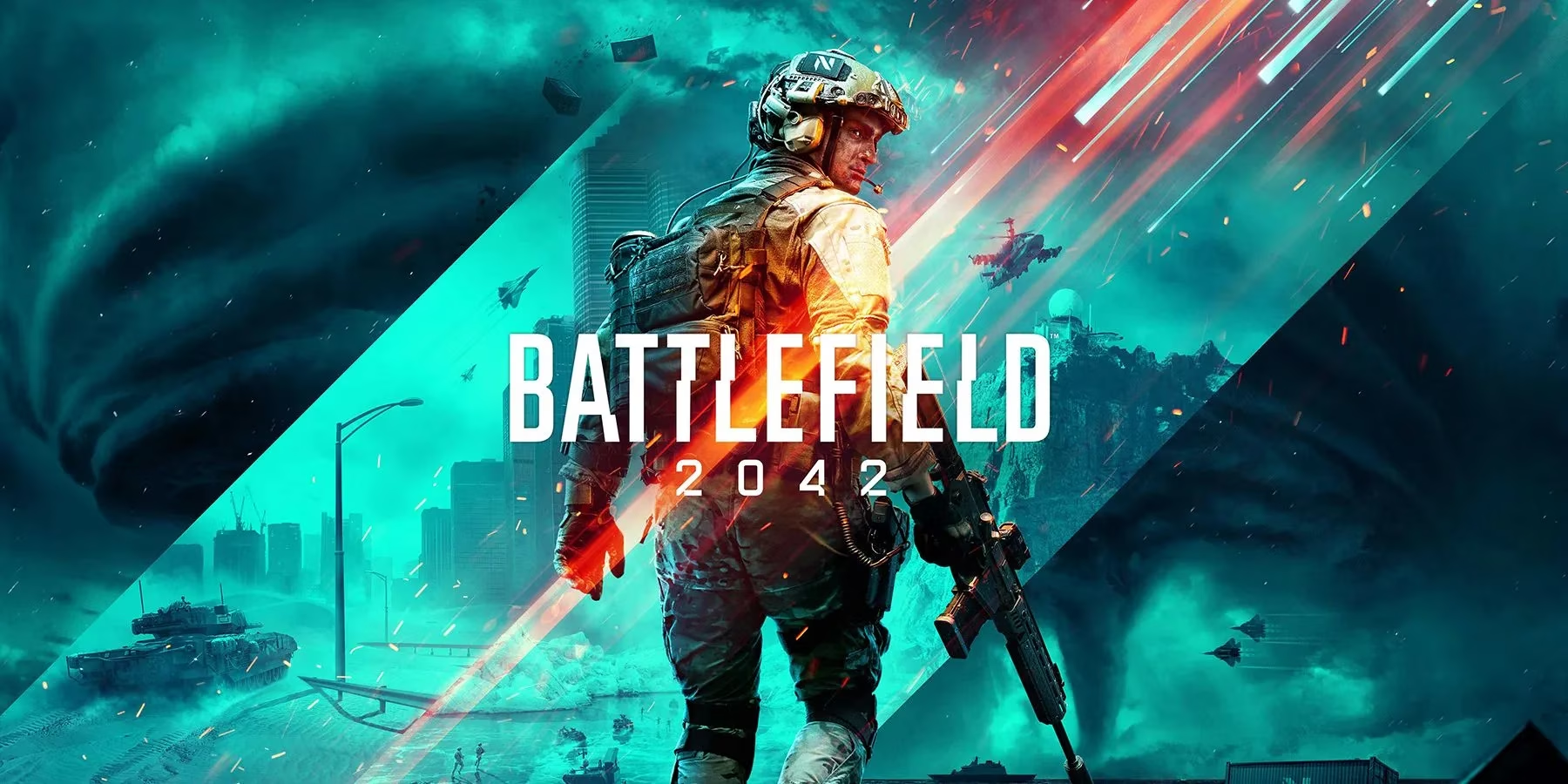
By the time Battlefield 2042 launched in November 2021, hype had reached fever pitch. The promise was intoxicating: a multiplayer-only shooter set in a futuristic landscape, featuring 128-player matches on massive, natural-disaster-prone maps. Three distinct modes were meant to cater to every type of player—classic All-Out Warfare, the Escape From Tarkov-esque Hazard Zone where squads extracted data drives against AI and rival teams, and the wildly ambitious Portal mode that let players remix content from Battlefield 1942, Bad Company 2, and Battlefield 3. Yet execution fell catastrophically short. The game shipped riddled with bugs and quality-of-life downgrades, last-gen consoles struggled with performance, and balance felt nonexistent. The open beta had already signaled trouble, but the final release magnified every flaw.
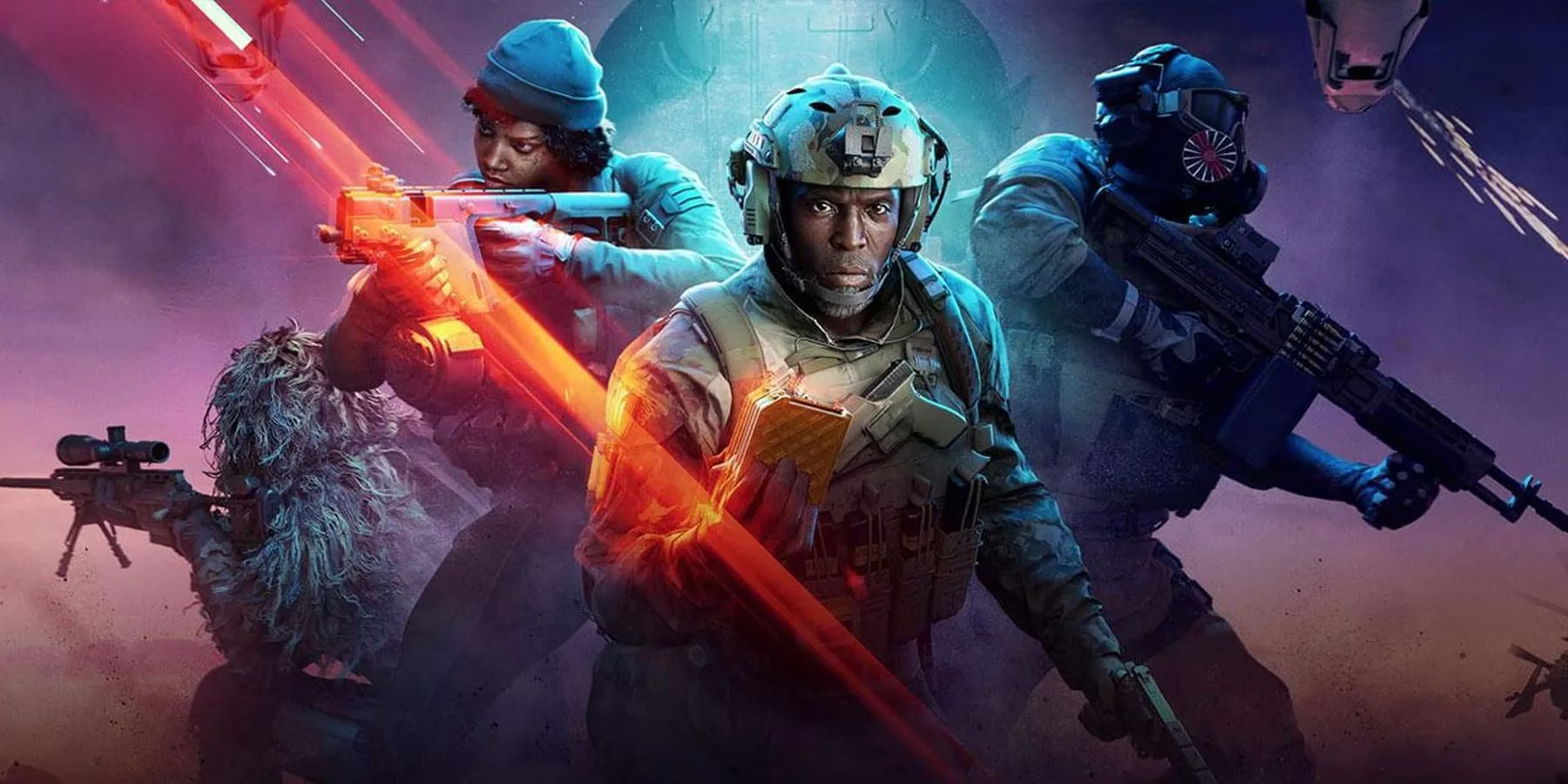
The numbers told a brutal story. Within four months, Battlefield 2042 failed to crack the top 50 most-played Xbox games. On Steam, its 24-hour peak dwindled to just 6,479 players—a fraction of the 100,000+ that had logged in at launch. Reports swirled that DICE might take the desperate step of making the game free-to-play to stabilize the player base, but even that drastic move could not reverse the damage. DICE Head of Design Fawzi Mesmar departed in the aftermath, and the studio’s roadmap crumbled under the weight of player exodus.
But what drove DICE to finally change course? The answer lies in a rare strategic window that opened in the FPS landscape. Microsoft’s 2023 acquisition of Activision Blizzard meant that Call of Duty, Battlefield’s perennial rival, entered a period of internal upheaval. For the first time in years, DICE had breathing room. Rather than rushing another entry, EA and DICE made the bold decision to step back entirely from the Battlefield IP, a move that began with a temporary hiatus in 2022 and evolved into a full reset. A newly appointed development team—free of the old guard that had overseen the last two missteps—spent two full years rethinking what Battlefield should mean in a modern context.
In 2025, that vision materialized as Battlefield: Resurgence. The game deliberately shed the excesses that had plagued its predecessor: it returned to the historical settings that fans loved, focused on tightly designed 64-player maps with destructive environments reminiscent of Bad Company 2, and insisted on a “ship when it’s ready” philosophy that would have been unthinkable a few years earlier. Hours of pre-release testing and a transparent community feedback loop replaced the guarded marketing of old. The result? A launch that, while not flawless, earned a “Very Positive” rating on Steam within its first month and sustained concurrent player counts above 80,000—a stark contrast to the graveyard 2042 became. Industry observers noted that the revival hinged on lessons learned directly from that disaster: polish over scale, communication over arrogance, and a return to the gritty teamwork that originally defined the series.
Looking back at 2026, it’s clear that Battlefield 2042’s catastrophic launch was the jolt the franchise desperately needed. Had DICE repeated Battlefield 5’s lukewarm redemption arc, the series might have limped into irrelevance. Instead, the studio used its lowest moment to dismantle a broken formula and rebuild trust with a community that had felt abandoned. The question now is not whether Battlefield can survive—but whether it can maintain this hard-won momentum in an industry that never stops evolving. For the first time in a decade, the answer feels like it belongs to the players.
As the gaming industry continues to evolve, players are not only seeking quality experiences but also the best value for their money. With so many new titles and updates being released, keeping track of the most competitive prices can be a challenge. For gamers looking to make informed purchasing decisions, a reliable game price comparison tool can be an invaluable resource.
Platforms like DealNest offer gamers a convenient way to explore and compare prices for their favorite titles across multiple retailers. Whether you're diving back into Battlefield's revitalized universe or exploring other blockbuster franchises, these tools help ensure you get the best deals without the hassle of endless searching. After all, enjoying a great game is even better when it fits your budget.
Comments