
How Battlefield 2042 Maps Were Transformed Through Player Feedback
Battlefield 2042’s map rework improved cover, traversal, and line of sight, transforming infantry movement.
Back in late 2021, when I first dropped into Battlefield 2042, the sheer scale took my breath away. 128-player chaos across the biggest maps DICE had ever crafted — it sounded like a dream. The reality hit me fast, though. I’d spawn at a distant base, sprint for what felt like minutes toward an objective, only to get picked off by a sniper hiding in a flat, open field where cover didn’t exist. The disillusionment was real, and I wasn’t alone. By early 2022, our voices filled forums and social feeds: something had to change. The launch had been a disaster, and veteran players like me were fleeing back to Battlefield 3 or 4. The future of the title seemed grim.
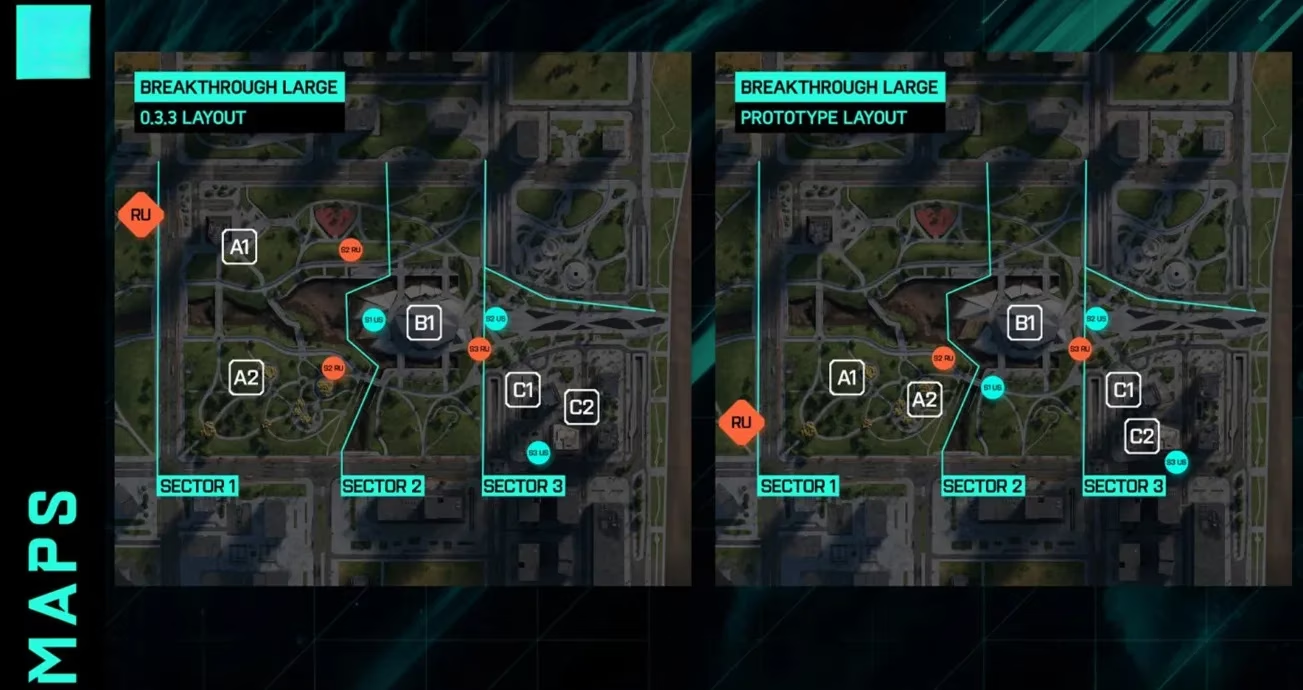
Then in April 2022, a glimmer of hope arrived. A community lead blog post laid out the five big pain points that players had blasted: traversal, intensity, line of sight, pathing, and cover. Reading it, I felt heard. DICE wasn’t just throwing out hotfixes; they were committing to structural surgery. Traversal topped the list — those marathon journeys between flags made me feel like I was playing a running simulator, not a battlefield. The maps were simply too vast to support the flow we craved, even with all the vehicle spawns. The studio promised to reposition objectives and bases, tightening the spaces so that action came quicker. Seeing the early concept of a revised Breakthrough layout — flags clustered closer, sectors redesigned — I dared to be optimistic.
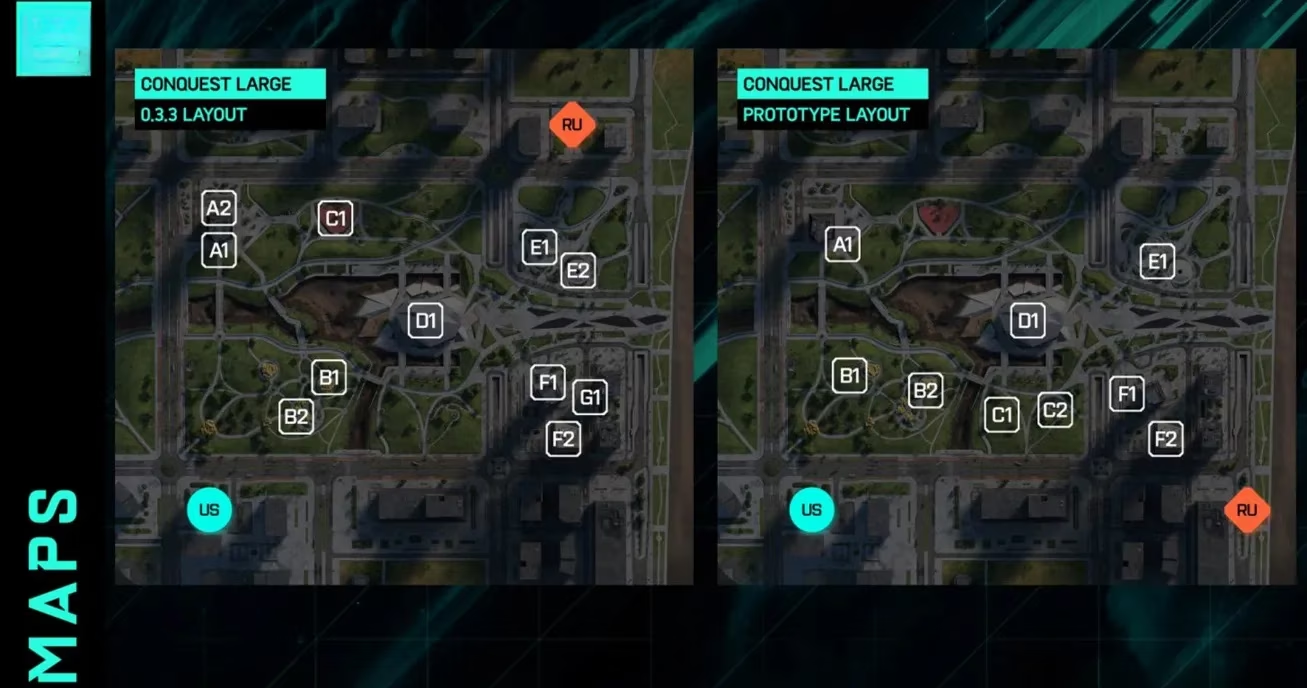
Line of sight and cover were twin demons that haunted every match. I can’t count how many times I got lasered from a kilometer away while crossing a barren stretch between buildings. The feedback screamed that long‑range gunfights dominated, killing the dynamic, close‑quarters skirmishes we loved. DICE’s goal was clear: shrink the emphasis on distant battles by carving out new cover spots, adding terrain undulation, and planting destroyable elements along the paths. More defined routes would guide us from flag to flag without exposing us to every angle of the map. It sounded like they were finally treating the environments as arenas, not just showpieces.
Pathing and cover became the foundation of what I later called the “walkable warzone” philosophy. By mid‑2023, when the first heavily reworked maps dropped in Season 3, I could trace the evolution. Kaleidoscope had real corridors carved between containers and crashed vehicles. Orbital gained debris fields and concrete barriers that broke sightlines, making infantry movement less suicidal. Even the chaotic 128‑player Breakthrough mode started to feel less like a sensory blender. DICE toyed with reducing player counts to 64 during a limited‑time test back in December 2021, and that experiment proved so popular that by 2024 it became the standard for focused objective modes. The intensity scaling — pulling back when matches got too overwhelming — taught me that more players doesn’t always mean more fun.
In the years since, I’ve watched DICE apply those same five feedback pillars to every new map that arrived with the seasons. Exposure was an early beneficiary — its verticality was balanced by carefully placed climbing points and cliffside shelters. Stranded turned a container ship graveyard into a maze of cover, where the line of sight constantly broke, rewarding SMG flankers over rooftop campers. They also retrofitted launch maps multiple times; Hourglass transformed from a desert nightmare of infinite sniping lanes into a layered urban conflict zone with more compounds and shaded alleys. The delayed first season, which stung so badly in 2022, eventually became the turning point because DICE chose to bake in the map feedback rather than rush out content. That patience saved the game for me and my clan.
By 2026, Battlefield 2042 feels like a different beast. The core of the game — specialists, gadgets, vehicles — still carries that near‑future flavor, but the playgrounds we fight on are no longer sterile expanses. Traversal now means using Ziplines placed near freshly arranged flag clusters to sling across gaps in seconds. I rarely face a 300‑meter sightline without a way to break contact: a smokescreen launcher, a new sandbag fortification, or a cratered road. Pathing became intuitive, almost organic, so that when I respawn at a base, I immediately know which ditch or building line will lead me to the frontline without becoming target practice.
The community’s voice was the driving force. DICE distilled our rage into actionable design updates, and slowly those ten‑second death loops turned into rewarding firefights. Even today, I revisit the old launch servers just to remind myself how far we’ve come — those empty flats now serve only as a memory. The transformation of Battlefield 2042 maps is a testament to what live service can achieve when developers truly listen. So here I am in 2026, still dropping into Kaleidoscope and Kaleidoscope’s reworked sectors, grateful that our early frustrations were not wasted. The battlefield is finally alive, and it’s built on the bones of our feedback.
Comments