
How 400 Fixes Couldn’t Save Battlefield 2042: A Player’s Tale
Battlefield 2042's Title Update 4.0 delivered 400+ fixes, sparking hope, but core foundation-level problems kept the game broken.
Back in early 2022, I was one of the stubborn few still logging into Battlefield 2042 every evening. I had been a Battlefield veteran since the days of Bad Company 2—those chaotic, all-out-war moments were my oxygen. When 2042 launched in November 2021, I pre-ordered the Gold Edition without hesitation. Then reality hit. The game was a broken mirror of the franchise I loved: missing scoreboard, buggy specialists, rubber-banding tanks, and a mouse input that felt like dragging a brick through mud. By February 2022, my regular squad had fragmented, and my own patience was running on fumes.
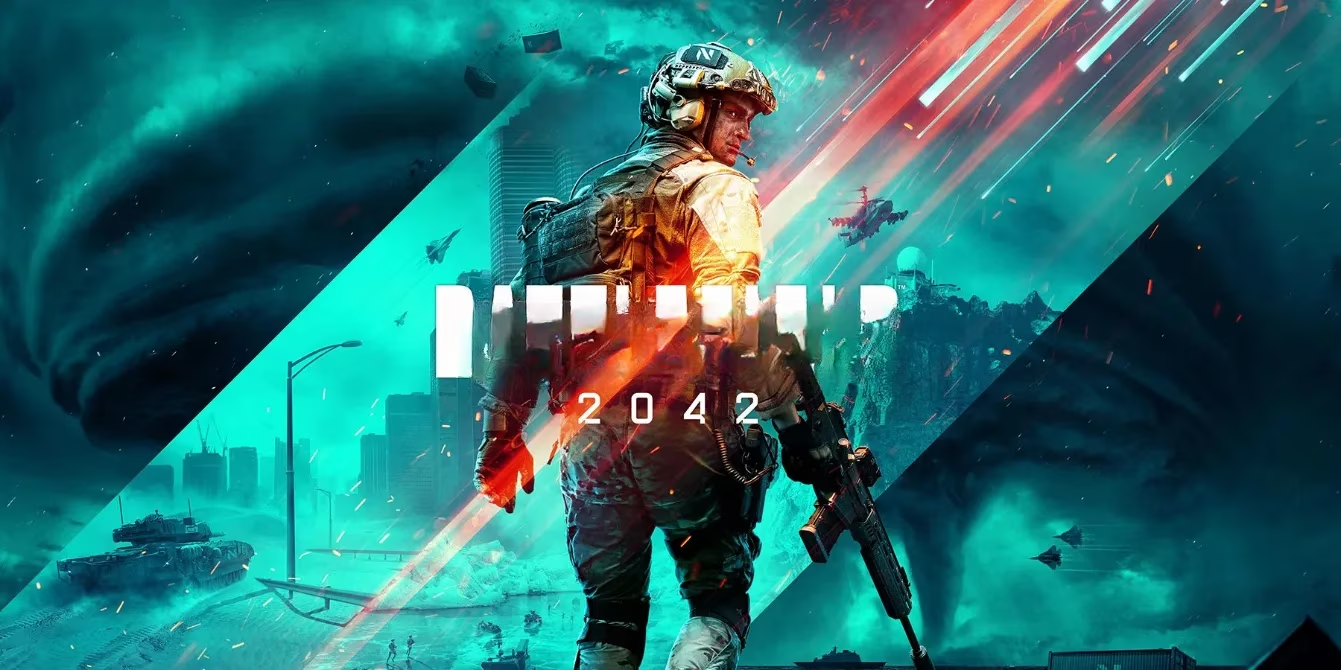
Rumors started swirling that DICE was about to drop a nuclear update—Title Update 4.0, scheduled for April 2022. A community manager named Kevin Johnson tweeted that it would contain “400+ Individual Fixes, Bugs, and QoL Improvements.” I read that number five times. 400. I remember thinking: This is either the comeback of the decade or the most elaborate band-aid ever applied to a haemorrhaging game. The update promised a reworked scoreboard (finally!), operator trait adjustments for Rao and Paik, a fix for Sundance’s famously glitchy grenade belt, rebalanced XP for support actions to encourage actual teamwork, vehicle tuning to keep infantry-vs-tank fights spicy, and a complete overhaul of weapon attachments. Every gun would supposedly feel distinct—no more cookie-cutter loadouts where only the meta mattered.
When the patch went live, I was sitting in my gaming chair at 3 a.m., coffee in hand, watching the download bar crawl. The moment I booted into a match, something felt… different. The SCAR-H had a real kick now; the new attachment system made me experiment instead of defaulting to the same foregrip. I could actually see my kills and captures on the scoreboard again. Paik’s sensor felt less oppressive, and Rao’s hacking tool finally had a clear tactical niche. My squadmates—who had vowed never to return—grudgingly reinstalled after I sent them screenshots. For about a week, we genuinely believed DICE was steering the Titanic away from the iceberg.
But icebergs are persistent. Even with 400+ fixes, 2042 still bled out. Performance on my RTX 3080 remained choppy during heavy destruction. The squad system, a cornerstone of Battlefield’s social glue, still lacked basic features like squad management and persistent parties. Mouse input, while slightly improved, still introduced random acceleration that made long-range engagements an RNG lottery. These weren’t small bugs; they were foundation-level cracks. Community forums became a mixture of cautious hope and bitter disappointment. Some posted “Thank you DICE,” while others countered with “400 fixes and the game still doesn’t feel like Battlefield.” I fell into the second camp by the end of that month.
The numbers told a grim story. That same spring, Battlefield 2042 dipped below 1,000 concurrent players on Steam—a staggering fall for a flagship AAA title only half a year old. Daily averages kept shrinking. EA announced that development on the next Battlefield entry was already underway, which felt like a death knell for 2042’s long-tail support. I couldn’t shake the image of a skeleton crew working on season-one content while management quietly moved talent to the next project. The summer launch of Season 1 arrived late, and though it brought new maps, the player base never truly recovered.
Fast-forward to 2026. I’m sitting here with a new Battlefield game teased on the horizon—EA’s next attempt to resurrect the sandbox shooter magic. Battlefield 2042’s servers still blink online, but the community has shrunk to a handful of nostalgia warriors. Looking back, Title Update 4.0 was the moment I saw what DICE wanted the game to be: a living, evolving battlefield that responded to player feedback. The 400+ fixes were a monumental effort. Armoury changes made loadouts fun again; vehicle balancing gave infantry a fighting chance without making tanks useless. The scoreboard’s return was a symbolic olive branch. Yet the underlying flaws were too deep. Performance, squad cohesion, and the fundamental design philosophies of specialists couldn’t be patched in a single update—no matter how chunky.
What sticks with me is the emotional rollercoaster. That week after 4.0 dropped, I experienced genuine joy. My friends who came back laughed in Discord when my Sundance wingsuit landed me in the middle of an enemy tank column. We celebrated every close-quarters squad wipe because the xp rewards finally rewarded teamwork. It was a glimpse of what could have been. But the joy was fragile. Once the novelty of the fixes wore off, the persistent issues gnawed back, and the player count reflected that reality.
If I’m being honest, the lessons from 2042’s 400-fix update are still relevant today. Live-service games live and die by their core loop and technical backbone. A huge patch can patch up wounds, but it can’t replace broken bones. As a player, I’ve become more cautious about day-one purchases. As a Battlefield fan, I hope the 2026 installment has learned that rushing to market without a soul will require far more than 400 fixes to regain trust. I’m ready to jump back into the chaos, but this time I’ll wait to see if the scoreboard is there from the start—and if the tanks actually obey the laws of physics.
Until then, April 2022 remains a bittersweet memory: the month DICE threw everything it had at Battlefield 2042, only to discover that even 400+ individual fixes couldn’t put Humpty Dumpty back together again. 🎮💔
Comments