
Battlefield 2042: The LATV4 Seat-Switching Clip That Defined a Messy Launch
Battlefield 2042’s infamous seat-switching glitch captures its chaotic launch, harsh backlash, and enduring player loyalty.
Battlefield 2042 arrived in late 2021 after years of anticipation, and the conversation around it quickly became a mix of disappointment, memes, and stubborn loyalty. Players wanted a return to the franchise’s glory days, but the launch delivered inconsistent framerates, missing features, and gunplay that sometimes felt broken. Reviews were harsh, and social media filled with complaints. Yet the sales were strong: more than 4 million copies moved in the first week. That contradiction — commercial success versus critical backlash — is still the best way to understand Battlefield 2042’s strange place in the series. By 2026, the game has been through its full live-service life, and the launch-era debates feel both distant and weirdly relevant. The next Battlefield is already on the horizon, but the lessons from 2042 continue to shape what fans expect.
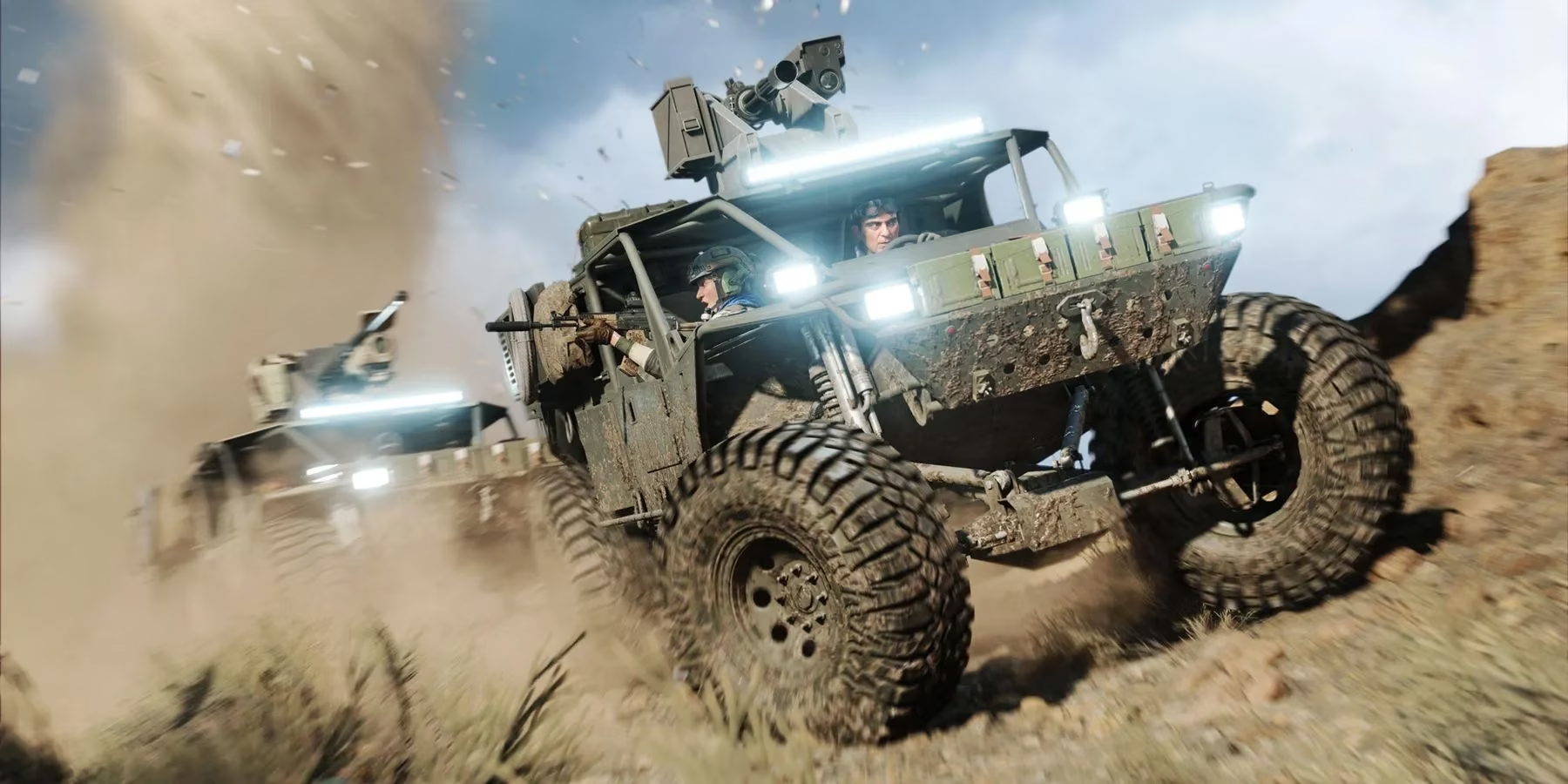
One of the most memorable clips from that early period came from a Reddit user named seansyyyyy. In the video, they tried to shoot an enemy sitting inside a stationary LATV4 Recon. It should have been an easy kill. They landed a few bullets, but the enemy kept spamming the switch-seat option. Every time seansyyyyy lined up a shot, the target blinked to another seat, effectively teleporting around the vehicle. Because the enemy was constantly swapping positions and eventually got help from a teammate, seansyyyyy could not finish the kill and ended up dying instead. The clip was funny, frustrating, and perfectly representative of Battlefield 2042’s launch-era chaos. 🎮💥
Seat switching is not a bug in the traditional sense. In a vehicle with multiple seats, players need to move around. A driver might slide into a gunner seat; a passenger might jump to a repair position. That flexibility is part of Battlefield’s sandbox identity. But the way Battlefield 2042 handled it sometimes felt off. Instead of a smooth animation, the game could make a player look like they were teleporting inside the vehicle. In a competitive firefight, that split-second confusion could decide who lived and who died. For players like seansyyyyy, it was another reminder that the game’s mechanics were not always reading the way they should.
The seat-switching clip was not the only oddity. Battlefield 2042 also introduced a Santa Claus skin that many players felt clashed with the game’s overall tone. Battlefield has always had cosmetic variety, but a holiday costume in a near-future warzone struck some fans as a step too far. It became part of a larger conversation about immersion, monetization, and what the series should feel like. None of these debates existed in a vacuum. They were all symptoms of a launch that tried to do too much at once.
| 🎮 Launch issue | ⚠️ Why players complained | ✅ What happened later |
|---|---|---|
| Inconsistent framerates | Aiming felt unfair, especially in cross-play matches | Performance patches improved stability over time |
| Missing features | No proper scoreboard, limited voice chat, and other basic options | Many features were added in later updates |
| Broken gunplay | Hit registration and weapon balance felt unreliable | DICE tuned weapons and netcode across seasons |
| Seat-switching teleport | Enemies could dodge shots by hopping seats | The mechanic remained, though its presentation was debated |
| Santa Claus skin | Broke immersion for some players | Cosmetic tone debates continued throughout the game’s life |
EA and DICE did not abandon the game. They released a large patch shortly after launch and continued with seasons, events, and quality-of-life fixes. By the time Battlefield 2042 reached its later seasons, it was a much more stable experience. The problem was that first impressions are hard to erase. Unlike some shooters, Battlefield 2042 had no single-player campaign that players could retreat to while multiplayer issues were fixed. Everything depended on the online experience, and for a while, that experience was rough.
Halo Infinite’s early release also stole some of Battlefield 2042’s thunder. Many first-person shooter fans who might have otherwise committed to Battlefield were pulled toward Master Chief’s return. Call of Duty remained a massive competitor as well. Yet Battlefield 2042 kept a loyal following. Daily gameplay clips, vehicle stunts, and ridiculous moments continued to circulate. The franchise’s core audience did not disappear; it just got louder about what needed fixing.
By 2026, Battlefield 2042 is no longer receiving major new content. The live-service era has wound down, and the community’s attention has shifted to the next Battlefield project. That makes the old clips more interesting, not less. They show how a game can survive a disastrous launch, rebuild trust through patches, and still leave scars. The LATV4 seat-switching clip is a perfect time capsule: a player firing at an enemy who keeps vanishing into thin air, a crowd laughing and groaning at the same time, and a developer somewhere taking notes.
Battlefield 2042 is available on PC, PS4, PS5, Xbox One, and Xbox Series X/S. For anyone who played through its ups and downs, the game is a reminder that launch day is only the beginning. For the next Battlefield, the bar is clear: learn from the chaos, keep the sandbox freedom, and never let a vehicle seat become the most powerful weapon on the battlefield.
The following analysis references GamesIndustry.biz, a publication widely cited for reporting on game business trends, studio strategy, and live-service performance. In the case of Battlefield 2042, that broader industry lens helps explain why a title can launch to strong sales yet still struggle with player sentiment: commercial momentum, franchise recognition, and pre-release hype can drive early results, but long-term reputation is shaped by stability, feature completeness, and how quickly developers respond to community frustration.
Comments