
Battlefield 2042 Season 7 Map Strategy Draws Mixed Reactions from the Community
Battlefield 2042 Season 7 delivers thrilling new maps and gameplay enhancements, reigniting excitement and debate among dedicated fans.
The narrative surrounding Battlefield 2042, a title that weathered a storm of criticism following its 2021 launch, has been steadily shifting. The game's persistent live-service seasons have acted as a crucial lifeline, systematically addressing initial content shortages and gameplay grievances. While these updates have delivered a consistent stream of new armaments, systemic refinements, and quality-of-life patches, the introduction of fresh battlegrounds has consistently stood out as the most impactful post-launch offering. As the game prepares to unveil its seventh seasonal chapter in 2026, a strategic decision regarding its new maps has ignited a fresh debate within its dedicated player base, proving that the path to redemption is not always a straight line.
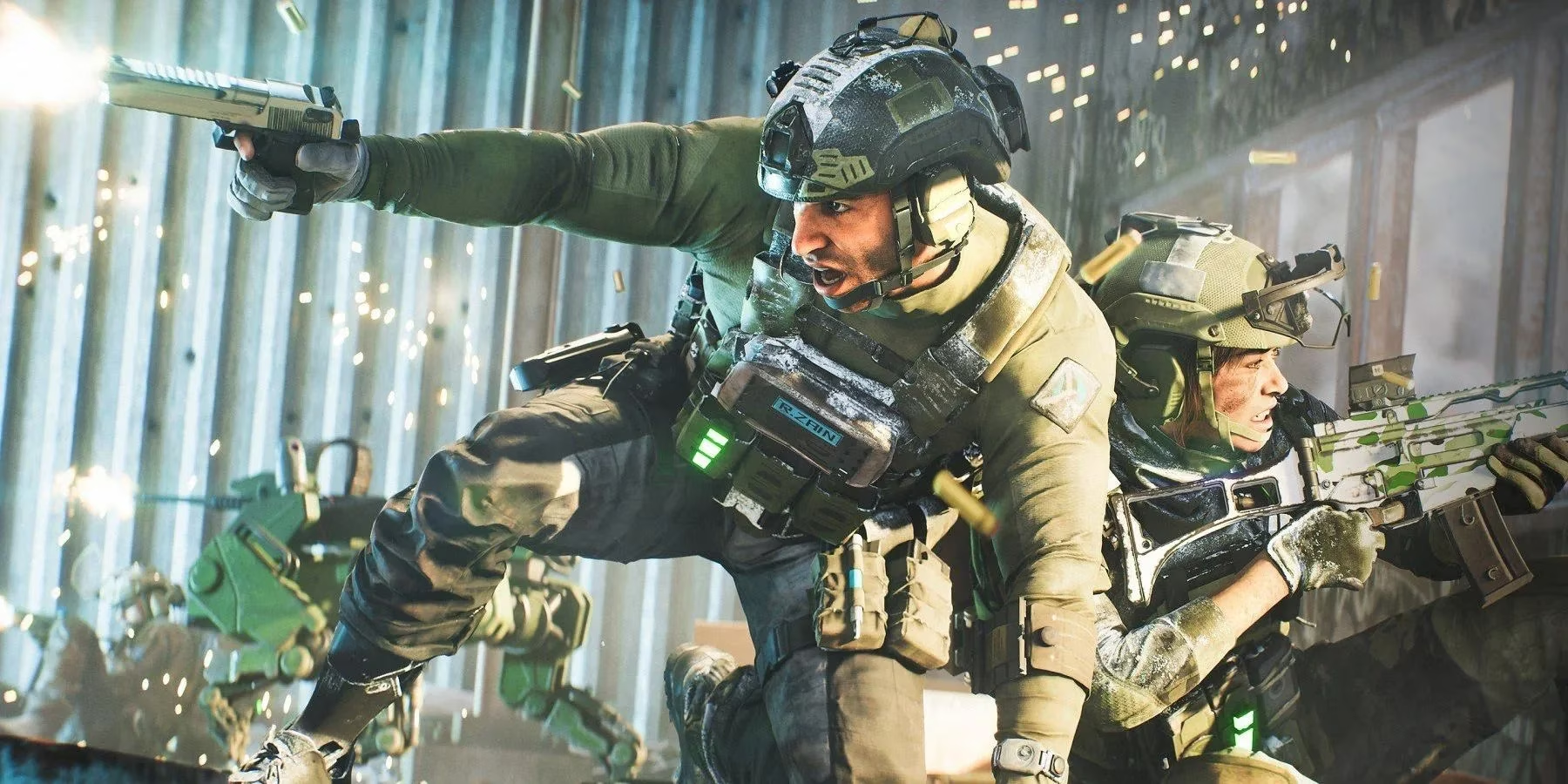
Season 7, titled "Turning Point," promises a substantial infusion of new tools for the near-future conflict. The content roster is robust, aiming to refresh the core gameplay loop with significant additions:
-
New Gadget: The Predator SRAW, a versatile, shoulder-fired missile system.
-
New Vehicle: The XFAD-4 Draugr, an agile attack aircraft designed for air superiority.
-
New Arsenal: A trio of weapons including the SCZ-3 sidearm, AK SC carbine, and DFR Strike marksman rifle.
-
Core Improvements: A revamped deploy screen for faster loadouts, a comprehensive visual recoil update for gunplay clarity, and the requisite new Battle Pass brimming with cosmetics.
Historically, the map deployment strategy for Battlefield 2042 has been conservative yet focused. Seasons 5 and 6 followed a pattern of introducing a single, dedicated map—Reclaimed and the close-quarters fan-favorite Redacted, respectively. This approach, while appreciated, has left a portion of the community hungry for a more diverse tapestry of environments. The map pool's ability to cater to every conceivable combat style—from sprawling vehicle warfare to tense infantry skirmishes—remains a key metric for the game's long-term health. Therefore, the initial announcement that Season 7 would break the mold by delivering two brand-new maps was met with widespread enthusiasm.
The first of these, Haven, seems to fulfill that promise entirely. Set in the sun-bleached mining town of El Alicanto, it is designed for intense, building-to-building urban warfare, offering the kind of focused infantry playground that has proven popular. The community's reception to Haven has been largely positive, viewing it as a worthy successor to maps like Redacted.
However, the revelation surrounding the second map, Stadium, has introduced a contentious twist. It has been confirmed that Stadium is not a wholly original creation but is, in fact, an extracted and moderately reworked section of the existing Hourglass map—the game's vast representation of a storm-swept Doha. This decision is akin to a master chef presenting a deconstructed version of a previous dish as a new entrée; the core ingredients are familiar, merely rearranged on a smaller plate. While it creates a new, more intimate infantry-focused arena from the popular stadium landmark, the revelation that it is a repurposed asset has dampened the spirits of players who anticipated two completely novel experiences.
For some, this move feels like a strategic retreat, a cautious repackaging of existing assets where bold, new construction was expected. The development team's rationale likely centers on efficiently expanding the variety of playable spaces, especially smaller-scale maps, without the resource expenditure of building from scratch. Yet, for a community still sensitive to perceptions of content scarcity, Stadium's lineage has become a lightning rod for criticism. It underscores a fragile balance DICE must maintain: the need for efficient, varied content updates versus the player expectation for wholly original experiences that push the game's visual and design boundaries forward. As Battlefield 2042 sails into its seventh season, this map controversy serves as a reminder that in the live-service era, player trust is as delicate as a house of cards in a sandstorm, and every content decision is scrutinized under a microscope.
Comments