
Battlefield 2042's Troubled Legacy: From Broken Launch to a Franchise at Crossroads
Battlefield 2042's disastrous launch and a 200,000-signature refund petition forced DICE to overhaul the game, but it never fully recovered.
When Battlefield 2042 stormed onto the scene in November 2021, it was supposed to be the triumphant return to modern military mayhem that fans had been craving. DICE and Electronic Arts had traded the historical trenches of Battlefield 1 and Battlefield 5 for a near-future playground of wingsuits, tornadoes, and 128-player chaos. Instead, what players got was a launch so rocky that it sparked a full-blown consumer revolt—one whose echoes still shape the franchise in 2026.
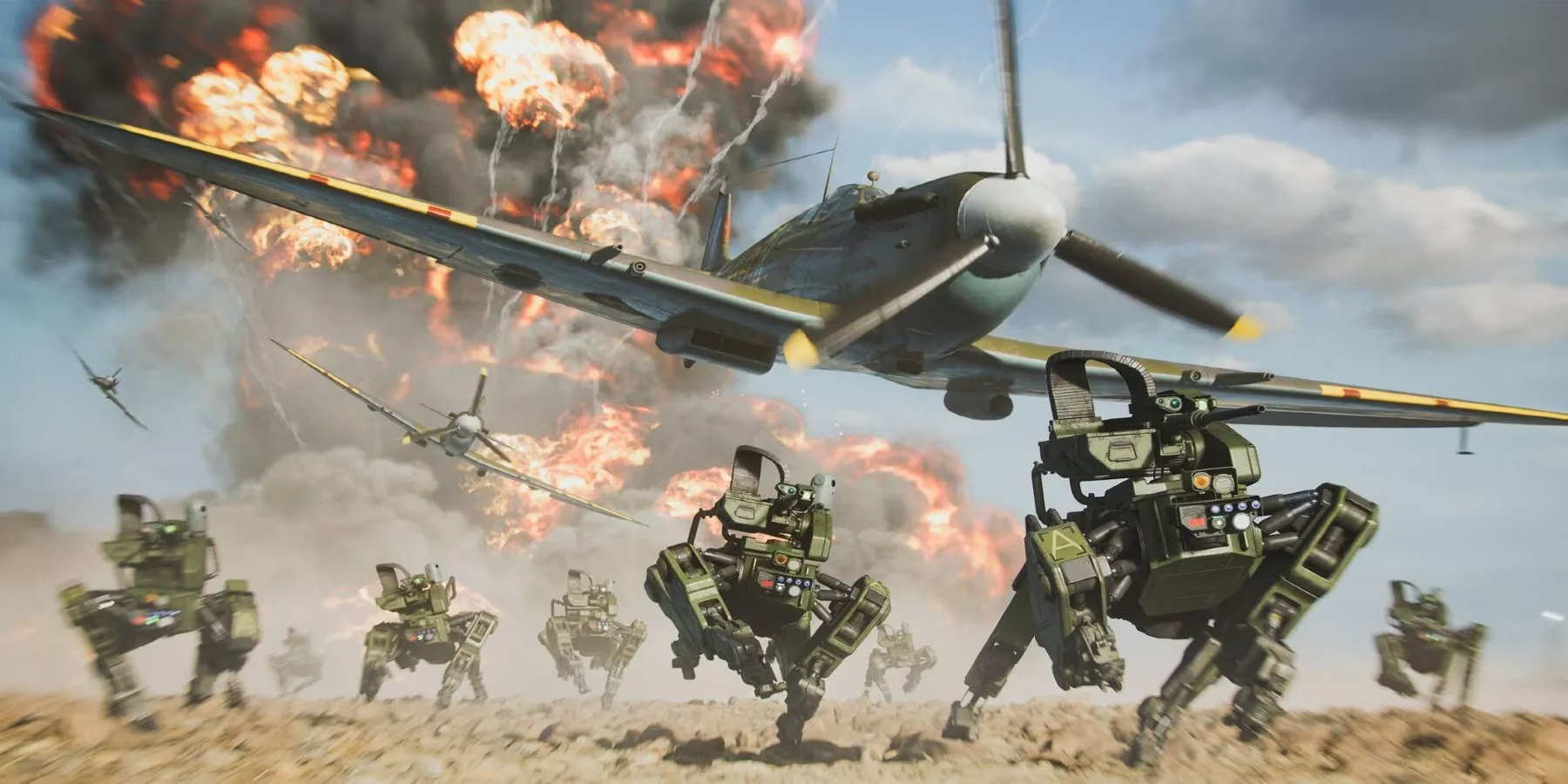
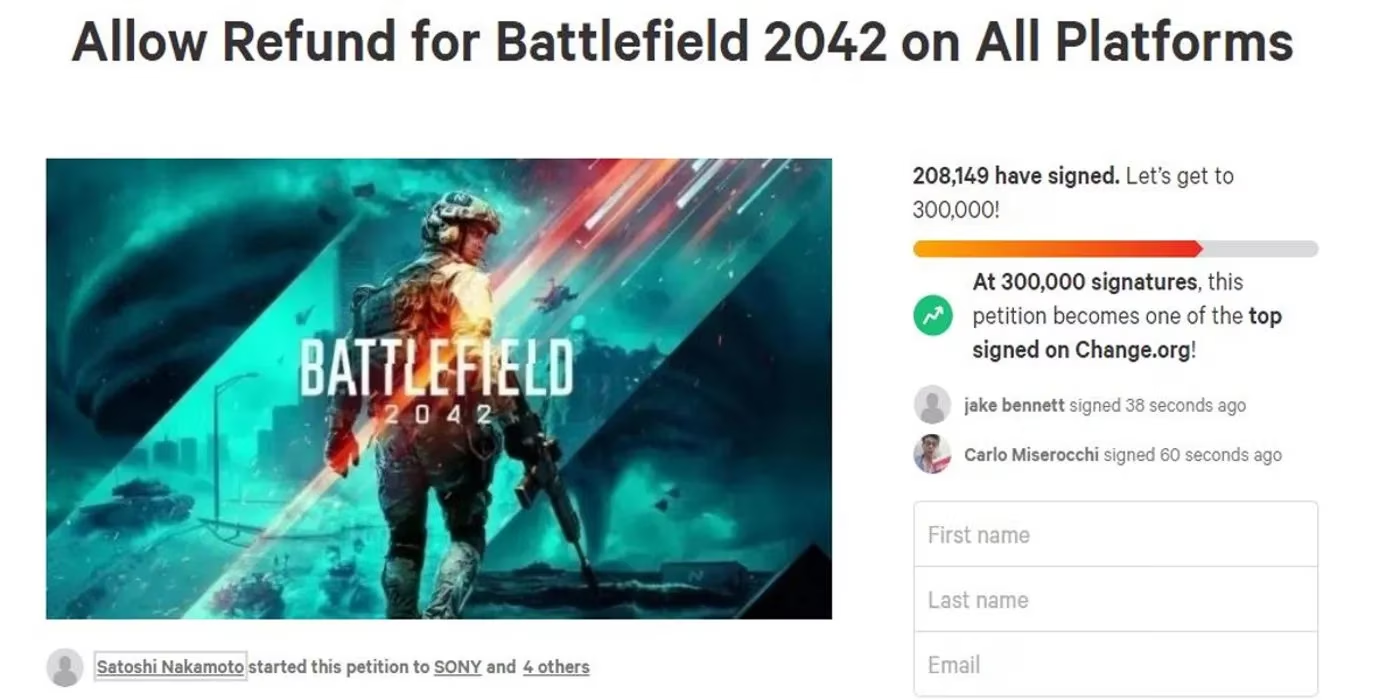
The initial backlash was swift and brutal. Fans flooded forums and social media with complaints about a dizzying array of bugs, missing features that had been staple in earlier titles, and an overall sense of an unfinished product. The outrage crystallized into a petition demanding refunds for disappointed buyers, which quickly gathered momentum and blew past 200,000 signatures. Satoshi Nakamoto—the pseudonymous creator of the petition, cheekily borrowing the name of Bitcoin’s inventor—argued that EA and DICE had failed to deliver on pre-launch promises and that the game was, in their words, “unplayable.” The strong language left little room for compromise, and it captured a sentiment shared by a massive chunk of the player base.
Central to the frustration was EA’s refund policy. While Origin had started issuing refunds back in 2013, the hoops customers had to jump through were numerous. Steam’s system was marginally more forgiving, but those who bought physical copies or went through third-party retailers faced even more obstacles. For many, the petition wasn’t just about getting their money back—it was a symbolic protest against what they saw as a broken industry norm of releasing half-baked live-service games.
DICE did not sit idle, at least publicly. A series of patches and bug fixes rolled out in the months following launch, each touted as a step toward redemption. Yet the damage was already hemorrhaging the game’s audience. The first official season, a critical content drop for any live-service title, was delayed by several months—a move that felt almost self-destructive. Players grew tired of waiting. By early 2022, the concurrent player counts on Steam told a damning story: older installments like Battlefield 1 and Battlefield 5 were routinely outperforming the new flagship. Veterans simply went back to where the fun was.
Fast-forward to 2026, and the situation has evolved, though the scars remain. DICE and EA eventually righted the ship somewhat—extensive reworks of maps, the introduction of class systems that restored a familiar rhythm, and a handful of well-received seasons gradually won back a modest but loyal population. However, Battlefield 2042 never achieved the massive revival that games like No Man’s Sky or Final Fantasy XIV enjoyed after disastrous launches. The live-service model that was meant to sustain it for years was scaled back, and by late 2024, EA had announced that the next mainline Battlefield title was in full production\u2014a tacit admission that 2042 had run its course.
Looking back, the game serves as both a cautionary tale and a catalyst for change. It exposed the fragility of player trust when marketing overpromises and development underdelivers. The refund petition, while unsuccessful in forcing a universal payout, amplified a conversation about consumer rights in digital gaming. Publishers took notice. In the years since, several major releases have adopted more flexible refund windows and clearer pre-launch communication\u2014a direct response to the Battlefield 2042 fiasco.
For the Battlefield franchise itself, the legacy is bittersweet. The 2025 release of the next installment\u2014codenamed \u201cBattlefield: Exodus\u201d by insiders\u2014was greeted with cautious optimism rather than blind hype. Early previews emphasized a return to basics: smaller lobbies, tight map design, and a heavy focus on polish. It seems the lessons of 2021 have not been forgotten. Still, the ghost of 2042 lingers in every Reddit thread and community Q&A. Gamers remember what it felt like to be sold a vision that crashed harder than a C5 Galaxy full of hovercrafts.
Ultimately, Battlefield 2042 will be studied for years as a textbook example of a AAA launch gone wrong. It’s a reminder that in an era where live-service games demand constant engagement, the first impression isn’t just important\u2014it’s everything. As of 2026, the servers are still online, and a few dedicated clans still hold their objectives, but the game that was meant to define a new generation of warfare instead defined a generation of skepticism.
As gaming continues to evolve, players are more mindful than ever about where they invest their time and money. This heightened awareness extends to finding deals on games, especially for titles that may have had rocky launches but still offer valuable experiences over time. For those looking to revisit or expand their gaming library, finding affordable options can make all the difference.
Platforms like cheapest steam keys provide an excellent opportunity for gamers to score discounts on both new releases and older favorites. Whether you're curious to revisit Battlefield 2042 or explore other titles that have stood the test of time, these deals can help you make the most of your gaming investments without breaking the bank.
Comments