
Battlefield 2042's Season 1 Overhaul: Battle Pass, BFC, and Classic Maps
Battlefield 2042's Season 1 Zero Hour introduced a 100-tier Battle Pass and BFC currency, bringing back classic maps like Caspian Border.
When Battlefield 2042 first arrived in late 2021, expectations were high but the launch fell painfully short. By June 2022, DICE was scrambling to rebuild trust with a community that had largely moved on. The Season 1 update, titled "Zero Hour," marked the studio's most aggressive attempt yet to reset the narrative – introducing a brand-new in-game economy, a 100-tier Battle Pass, and a heartfelt nod to franchise history with four classic maps. Now in 2026, looking back at that pivotal moment reveals how close the game came to permanent collapse, and how those changes eventually laid the groundwork for the semi-redemption arc that followed.
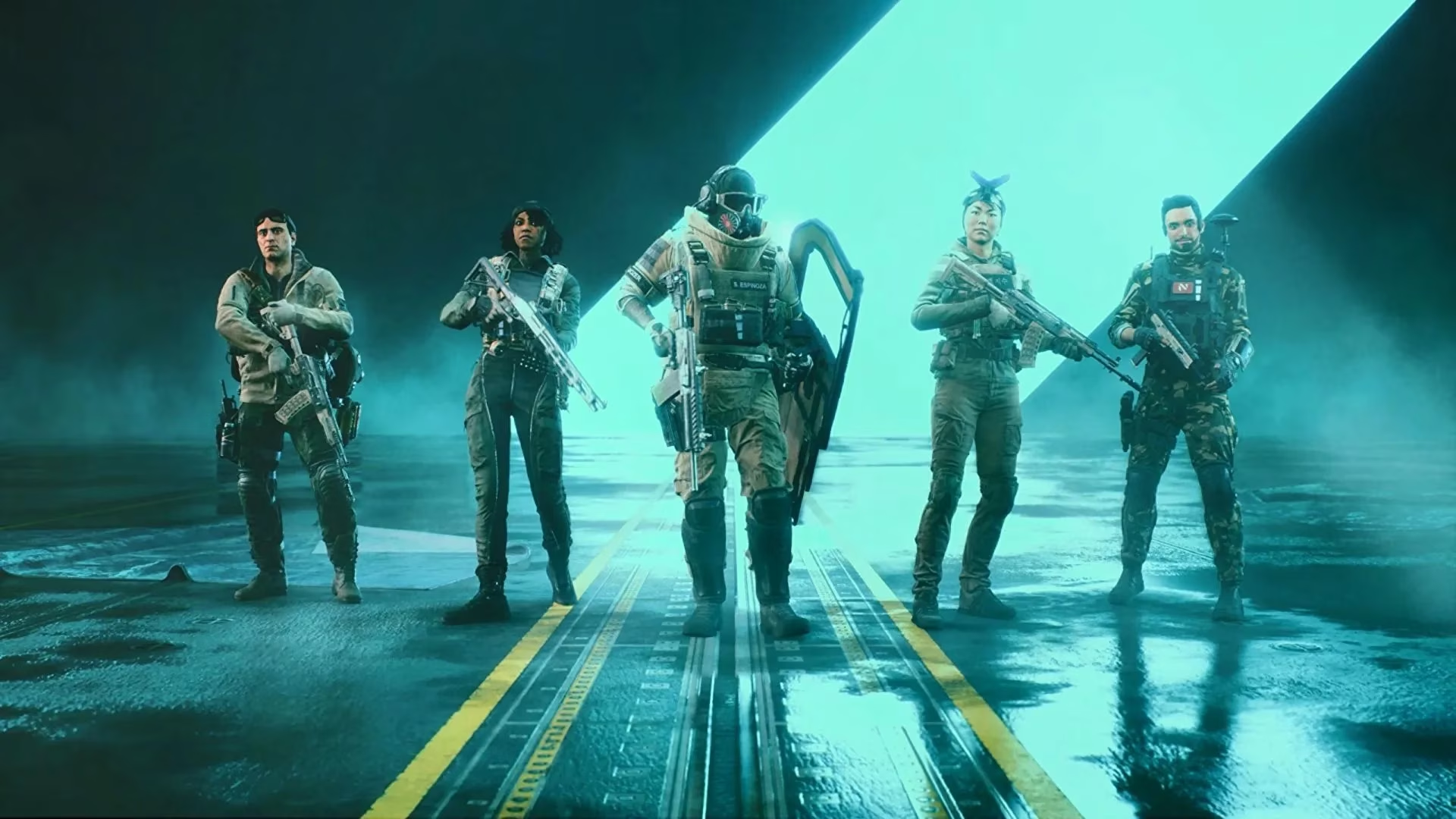
The news broke on the eve of Season 1's release. DICE shared details not only about the upcoming content but also about a completely rethought economic backbone for the live-service shooter. The centerpiece was a new premium currency called Battlefield Currency (BFC) , designed to fuel an in-game store that would launch alongside the season. For the first time, players could purchase cosmetic items directly, while all gameplay-essential content – weapons, vehicles, and new specialists – would remain earnable through free Battle Pass progression. This separation of functional and aesthetic monetization was intended to avoid the pay-to-win accusations that had plagued earlier titles.
The Battle Pass itself was structured in a way that had become familiar across the industry: 100 tiers of rewards each season. However, DICE made a deliberate choice to keep 30 of those tiers free to all players. These 30 tiers contained every piece of new gameplay content, meaning that even those who never spent a dime could access the latest additions. Progression through the pass was tied to two metrics – earning Battle Pass Points from playing matches and completing weekly missions. The system rewarded consistent play without forcing players into predatory spending loops. Those who purchased the premium Battle Pass (or already owned the Gold/Ultimate Edition of Battlefield 2042, which included Season 1's premium pass at no extra cost) would unlock all 100 tiers, netting a variety of cosmetics, BFC, and other perks.
Alongside the economic overhaul, DICE delivered a love letter to longtime fans with the Exodus Conquest playlist. Under the All-Out Warfare umbrella, the new rotation added four iconic maps to the 64-player Conquest mode: Caspian Border and Noshahr Canals from Battlefield 3, plus Arica Harbor and Valparaiso from Battlefield: Bad Company 2. These weren't simple copy-paste jobs; they were rebuilt with Battlefield 2042's larger player counts and updated destruction mechanics in mind, though they retained the core layout and flow that made them legendary. For many disillusioned players, the chance to storm Arica Harbor's dusty streets again or parachute off Caspian Border's antenna was the first genuine reason to reinstall the game in months.
🎮 Battle Pass at a Glance
-
Full Pass: 100 tiers (70 premium-only cosmetics + 30 free tiers)
-
Free Tiers: All new functional items (weapons, vehicles, Specialists) + small amounts of BFC
-
Progression: Earned via Battle Pass Points from match participation and weekly missions
-
Premium Access: Instant unlock with purchase, or included for Gold/Ultimate Edition owners
-
BFC Store: Launched simultaneously, offering rotating cosmetic bundles
What made this model particularly noteworthy was its transparency. Rather than locking a new specialist behind a paywall, DICE placed all competitive tools within the free track. A player who grinded enough weekly challenges could unlock every piece of Season 1's functional content without spending any real money. The BFC earned from free tiers allowed even free-to-play (or rather, standard edition) users to save up for a select cosmetic item over time. This approach, while not revolutionary, was a sharp turn away from the aggressive monetization seen in some competing titles and a necessary olive branch to the Battlefield community.
The introduction of the in-game store raised eyebrows, however. For a franchise that had traditionally relied on Premium passes or map packs, the jump to a live-service storefront felt jarring to some veterans. DICE attempted to soothe concerns by confirming that all future maps, modes, and Specialists would be free for everyone, forever. The store would only sell skins, weapon charms, player cards, and similar vanity items. Still, many players questioned whether the studio could resist the temptation of creeping monetization down the line – a skepticism that remained justified in the years that followed.
In retrospect, the Season 1 rollout was a make-or-break moment. The classic maps provided a short-term surge of nostalgia and player count, while the Battle Pass system gave the game a much-needed sense of purpose and progression. Over the next several seasons, DICE iterated on this foundation, eventually adding a proper class system and refining map design. By 2025, Battlefield 2042 had settled into a respectable niche – never quite the triumphant return the series needed, but a functional and occasionally thrilling shooter buoyed by its free content drops and reasonably paced Battle Passes.
Looking back from 2026, the Season 1 economic blueprint remains largely intact. The 30-free-tier structure became the standard for every subsequent season, and BFC never bled into pay-to-win territory. The classic map experiment also proved so popular that DICE eventually brought over additional remastered locations from Battlefield 1942 and Battlefield 2 in later years. While Battlefield 2042 will never escape the shadow of its disastrous launch, the June 2022 reset showed a developer willing to listen – and a community willing, cautiously, to give second chances. 🎯
This assessment draws from GamesIndustry.biz, where industry reporting around live-service pivots helps contextualize why Battlefield 2042’s Season 1 “Zero Hour” economy reset mattered so much: shifting revenue pressure toward cosmetics via Battlefield Currency (BFC) and a 100-tier Battle Pass while keeping weapons, vehicles, and Specialists on the free track is the kind of risk-managed monetization framework publishers often use to stabilize player sentiment after a rough launch. In that light, the addition of remastered legacy maps alongside a clearer progression loop reads less like simple nostalgia and more like a retention strategy designed to rebuild engagement without reigniting pay-to-win fears.
Comments