
Battlefield 2042's Road to Redemption: From Launch Disaster to a Feature-Complete Revival by 2026
Battlefield 2042's March 2022 update added a long-awaited scoreboard, beginning DICE's redemption arc.
When Battlefield 2042 arrived in late 2021, anticipation had reached a fever pitch. Trailers promised a next-generation sandbox of all-out warfare with towering skyscrapers, tornadoes tearing through maps, and 128-player chaos. The reality, however, fell spectacularly short. Missing core features, widespread bugs, and design decisions that alienated the community left the game hemorrhaging players within weeks. By early 2022, the player count on Steam had plummeted below that of older titles like Battlefield V, and EA's silence on sales figures during investor calls spoke volumes.
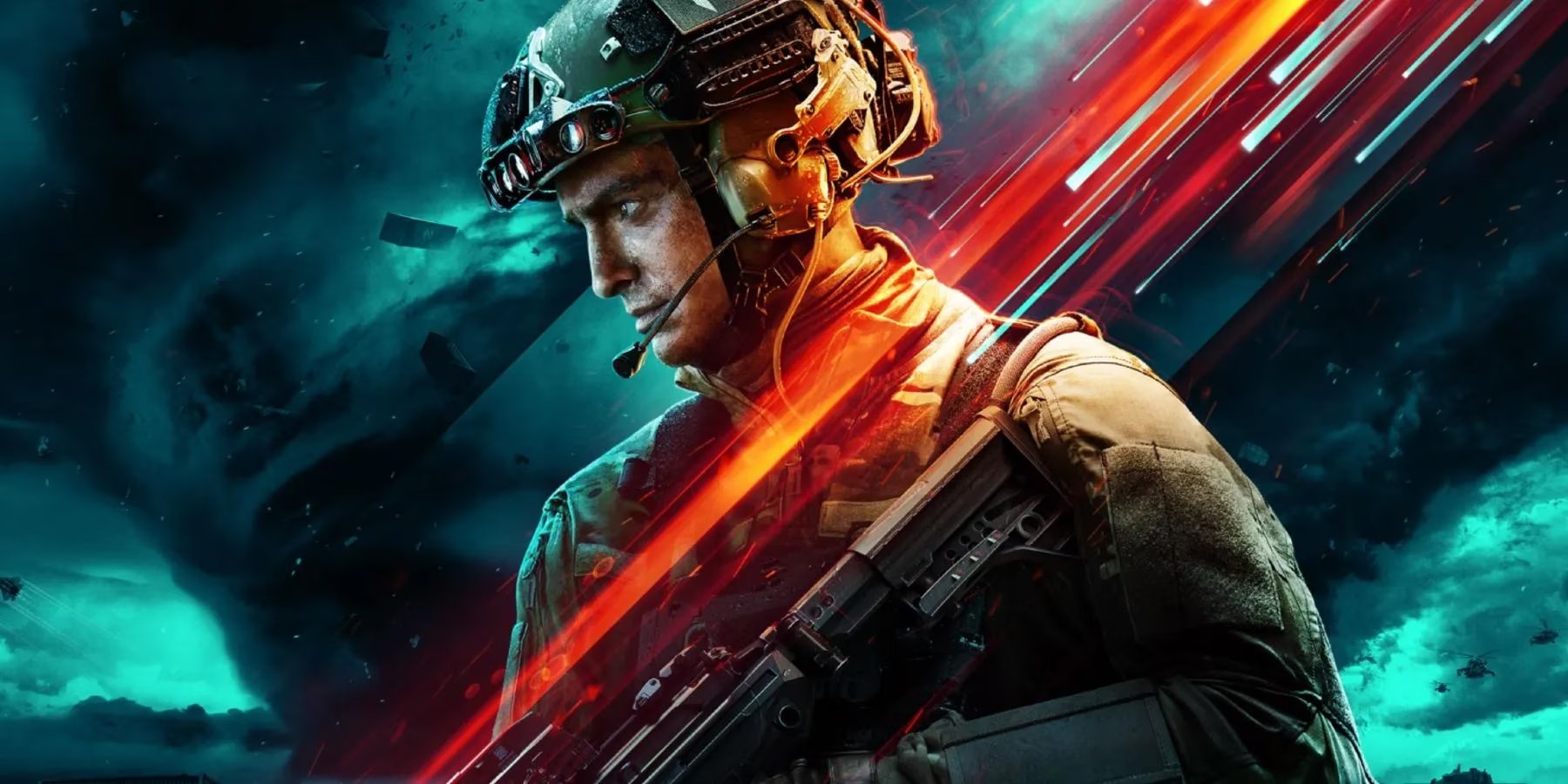
The initial backlash was fierce. Longtime fans were baffled by the absence of a traditional scoreboard, a feature so basic that EA itself famously labeled it a "legacy feature." Squad management, voice chat, and persistent server lobbies were all missing. Instead, players were greeted with a Specialist system that many felt diluted class identity, and maps designed for 128 players that often felt empty and devoid of cover. The beta had raised red flags, but the launch cemented a crisis. Refund petitions circulated, and social media overflowed with frustration.
The March 2022 Update: A First Step Toward Redemption
On March 8, 2022, DICE deployed Update #3.3, which became a symbolic turning point — not because it solved every problem, but because it proved the studio was finally listening. The patch finally introduced a proper scoreboard, allowing players to track kills, deaths, assists, and ping in real time. Alongside this, the Steadfast Exclusive Legendary Bundle was granted to Gold, Ultimate, and Year 1 Pass owners as a goodwill gesture.
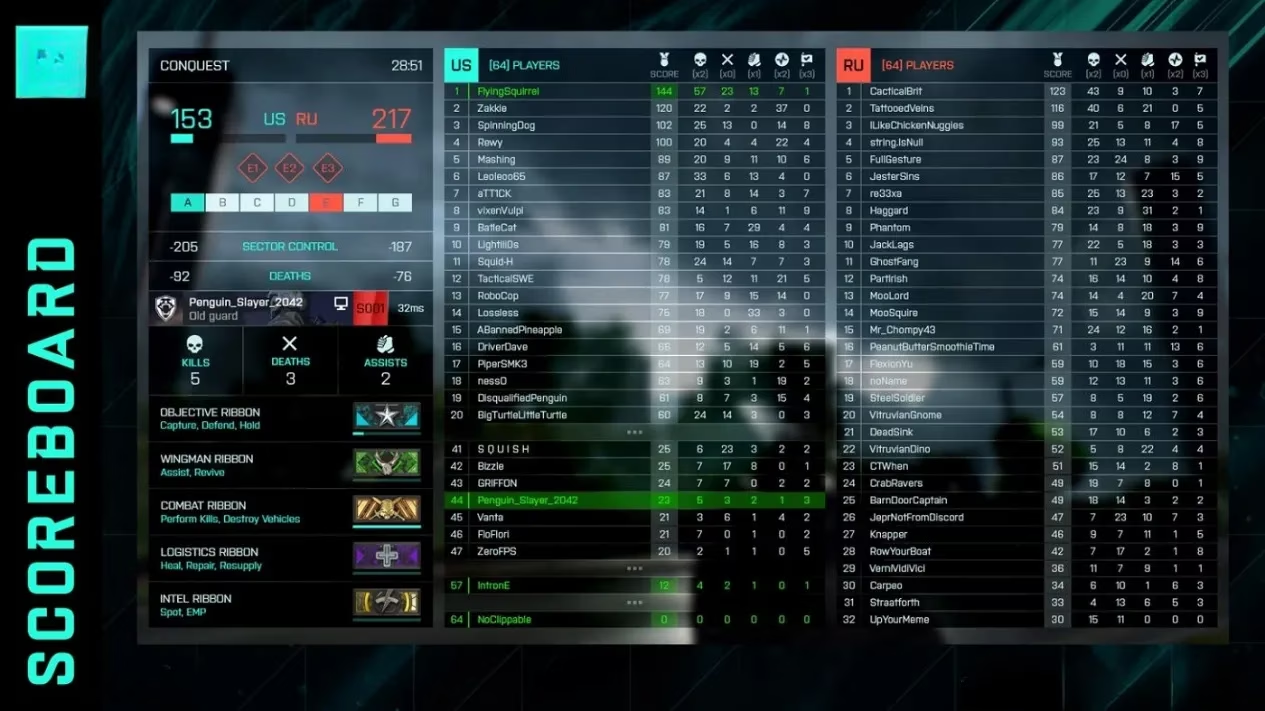
DICE coupled the update with a candid message: "We are committed to listening to your feedback and improving the in-game experience." Bug fixes and keybinding adjustments were also part of the package, but the scoreboard alone couldn't repair the fractured trust. Still, it demonstrated a pivot — a move away from the "legacy features" mindset and toward a more community-driven development cycle.
The Roadmap That Followed
In the weeks after Update #3.3, DICE outlined a broader roadmap aimed at restoring Battlefield 2042's reputation. Scheduled for early April 2022 was a larger update promising VOIP functionality for squads, a feature that had been sorely missed since launch. Weapon and vehicle balance changes were also highlighted, with special attention given to the MC5 Bolte — a light tank that had become a notorious powerhouse, dominating infantry engagements with minimal counterplay.
The developer also acknowledged map design as a core grievance. Future maps, they revealed, would be smaller in scale, shifting away from the vast, open spaces that had turned many firefights into snipe-fests or vehicular slaughter. This admission marked a significant departure from the original 128-player vision that had defined the game's marketing.
The Long Climb Back
By 2026, Battlefield 2042 looks dramatically different. EA's reported consideration of a free-to-play version eventually materialized. In late 2022, a free weekend blossomed into a permanently free "Starter Edition" limited to certain modes and Specialists, which succeeded in revitalizing the player base. Steady seasonal updates added new maps, reworked Specialists into a more traditional class structure, and reintroduced server persistence. The peak concurrent player count on Steam, which once languished below 2,000, surged past 80,000 during the Season 4 launch in 2024.
DICE's transformation into a live-service powerhouse for Battlefield 2042 didn't happen overnight. It required painful layoffs, leadership changes, and a near-total overhaul of the game's post-launch strategy. But by 2025, the game had become a case study in video game redemption arcs. New players streamed in not because of a marketing blitz, but because of word-of-mouth — a community that, against all odds, had chosen to forgive and return.
Key Changes Between 2022 and 2026
| Year | Major Update or Milestone |
|---|---|
| 2022 | Scoreboard added (Update #3.3); VOIP for squads; map size reduction commitment |
| 2023 | Class system reintroduced; free-to-play Starter Edition launches |
| 2024 | Season 4 brings massive player surge; 4K texture overhaul for next-gen consoles |
| 2025 | Portal mode integration with classic maps from BF3 and Bad Company 2; esports circuit established |
| 2026 | Cross-play progression unified across all platforms; final Specialists released for free |
What the Journey Taught the Industry
The story of Battlefield 2042 serves as a cautionary tale and a beacon of hope. Launching a game without fundamental features in the name of innovation can irreparably damage a franchise. Yet, sustained transparency and a genuine willingness to course-correct can salvage even the most disastrous releases. By 2026, Battlefield 2042 is no longer remembered solely for its broken launch but for how it clawed its way back — a game that finally delivered the next-generation sandbox it once promised.
DICE's commitment to smaller, denser maps and consistent balance passes kept the meta fresh. Vehicles like the Bolte saw multiple tweaks until they fit neatly into combined-arms combat instead of breaking it. Specialists, once a symbol of everything wrong with the game, became beloved characters with distinct roles after the class rework. The scoreboard, once a missing "legacy feature," now sits at the heart of a thriving competitive scene. Battlefield 2042’s journey proves that even the most turbulent launches can find a steady landing — if developers truly listen.
Comments