
Battlefield 2042's Redemption Arc: Inside DICE's Map Rework Journey and Future Vision
Battlefield 2042's map reworks and community-driven development showcase DICE's remarkable gaming redemption and live-service excellence.
As a long-time Battlefield enthusiast, I've been on a rollercoaster with Battlefield 2042 since its tumultuous launch. 😅 From struggling player counts to a complete turnaround in perception, the journey has been nothing short of dramatic. Now in 2026, looking back at how DICE transformed this game through relentless map reworks and community-driven development feels like witnessing a true gaming redemption story. The team's commitment to listening, adapting, and fundamentally redesigning the entire launch map roster has created something special—a testament to what live-service done right can achieve.
🎮 The Three-Pronged Approach: Data, Sentiment, and Developer Vision
When I spoke with DICE producer Nika Bender and lead level designer Shashank Uchil, they revealed their secret sauce: a three-pronged feedback system that blends quantitative data, qualitative player sentiment, and internal developer intuition. 🔍 This isn't just about reading Reddit threads (though they definitely do that!)—it's about triangulating what players say, what the telemetry shows, and what feels right during actual gameplay.
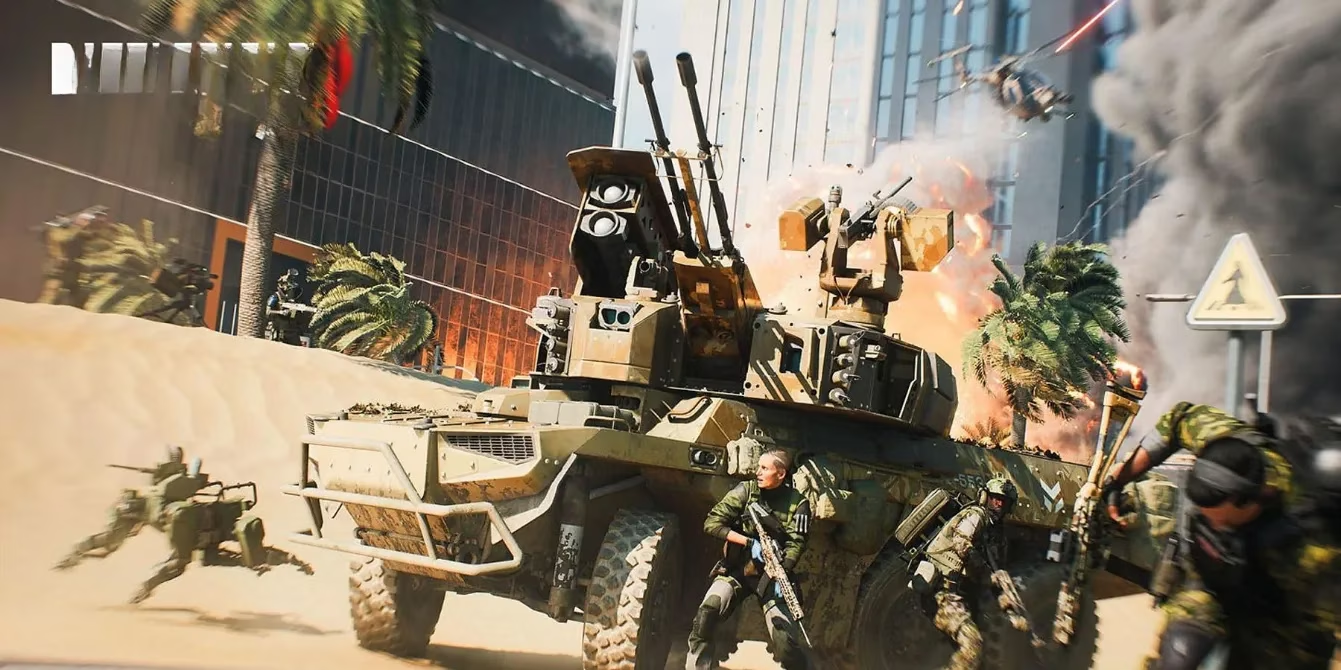
Uchil explained it perfectly: "We have this three-pronged thing where we have three sorts of data. One is how we feel, we can look at telemetry as to what is actually happening numerically, and then you can see sentiment-wise what's happening because there are a bunch of times when sentiment and numbers don't match." This approach helped them identify core issues that weren't immediately obvious—like when players complained about map sizes but the real problem was engagement with vehicle call-in systems.
Key Feedback Integration Examples:
-
Map Size Complaints: Players felt maps were too large, but telemetry showed they weren't using available vehicles
-
Visual Polish: The community described launch maps as "too pristine," leading to more war-torn aesthetics
-
Balance Perception: Some maps felt imbalanced despite 50/50 win rates in data
🗺️ The Map Rework Philosophy: Why Fix Old Instead of Just Making New?
This was the million-dollar question: Why spend precious development resources reworking existing maps instead of just creating new content? For DICE, this became a moral and practical decision. Bender explained: "It just didn't seem fair for the players for us to be pushing 'No, we hear your feedback, but we're just going to keep throwing new things at you' when it was very obvious that players were like 'We really want to enjoy these maps.'"
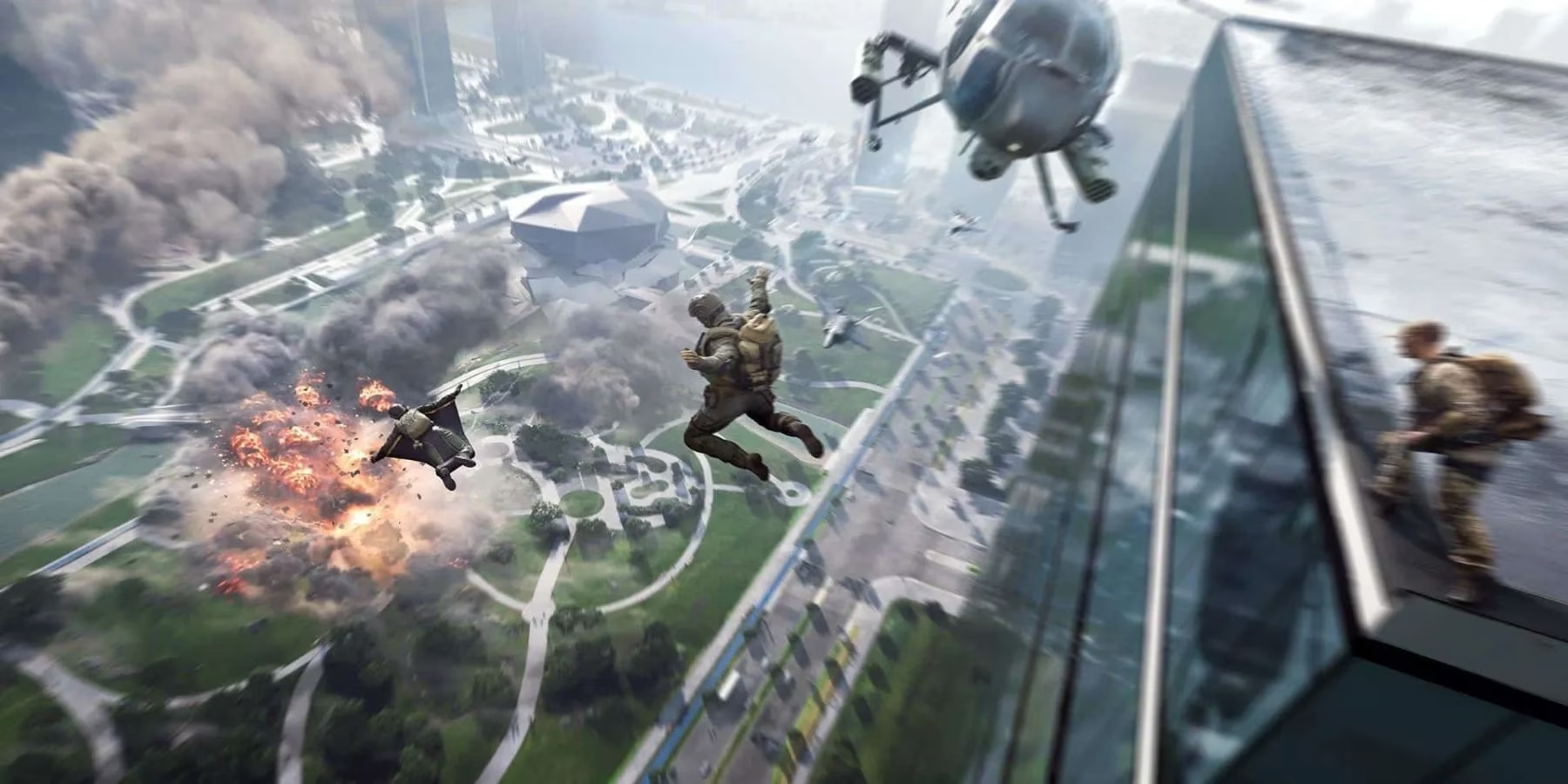
The team made a conscious choice to split resources between new seasonal maps and comprehensive launch map reworks. This wasn't the easy path—Uchil admitted that level designers naturally want to create new content: "If you ask someone from the level design team, you always want to make new shit, right? Where can we make new maps?" But the commitment to fixing what was already shipped became their guiding principle.
The Rework Priority List:
-
Reduce Distances: Addressing the "running simulator" complaints
-
Fix Scale: Making spaces feel appropriately sized for engagements
-
Add Cover: Creating more tactical opportunities and protection
-
War-Torn Aesthetics: Moving from clean environments to battle-damaged realism
🏜️ The Hourglass Saga: Saving the Most Challenging for Last
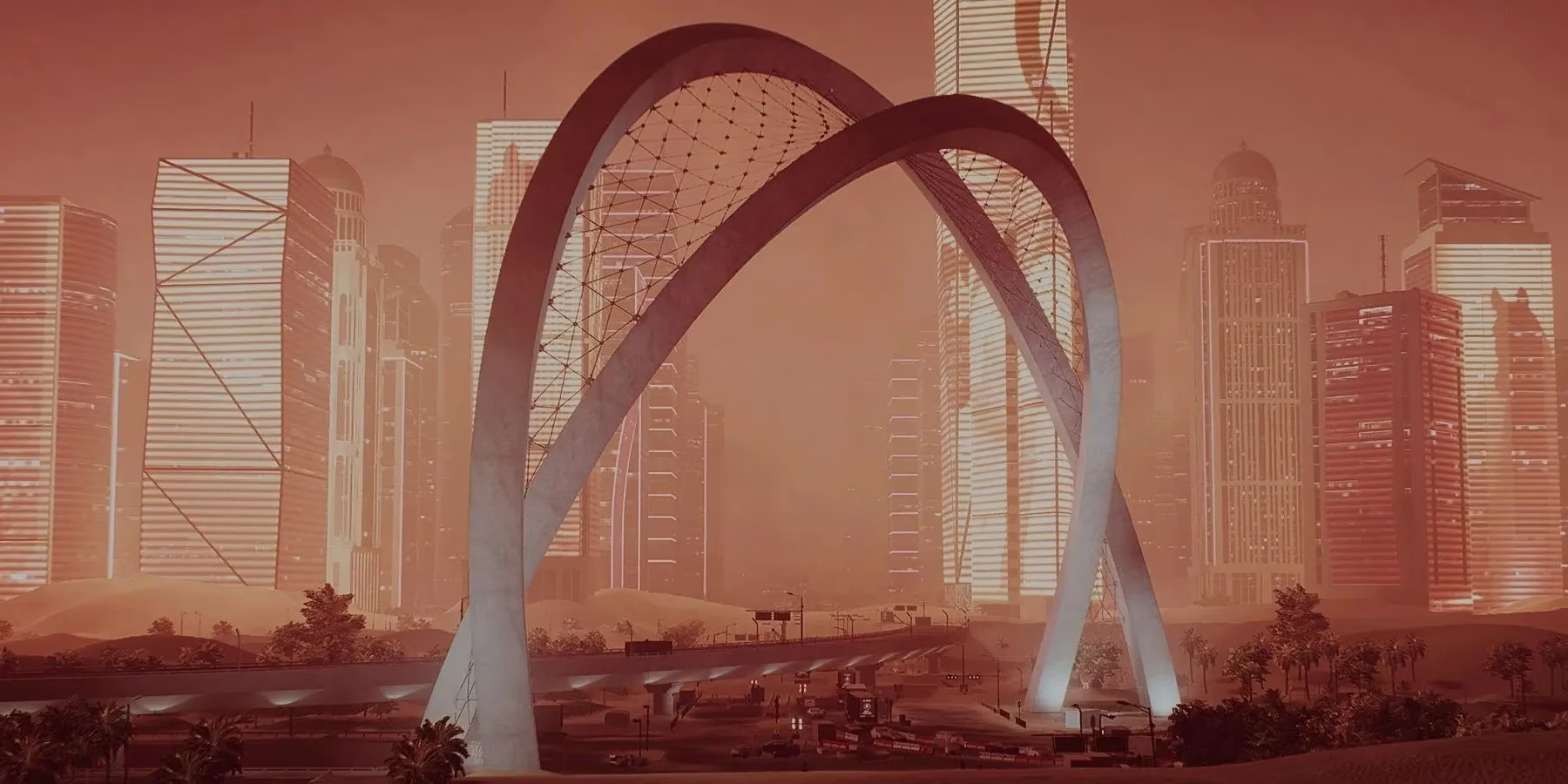
Ah, Hourglass—the map that became synonymous with Battlefield 2042's early struggles. 🏜️ The team deliberately saved this rework for last, and the reasons were both technical and philosophical. Uchil shared the brutal truth: "Hourglass is the most difficult map to solve. Because of how it's been built... where the sand dunes are not an easy thing to tweak because of the way they've been built."
The sand itself became the ultimate antagonist. As Bender joked: "I am traumatized by the sand, by the way. Someone mentions sand and I'm like 'No sand, no.'" The environmental storytelling of a sand-covered city created unique challenges—how do you logically place military equipment on shifting dunes? This led to the heartbreaking but necessary decision to cut the iconic stadium, despite it being a significant development investment.
Hourglass Challenges:
-
Sand Physics: Making objects look natural on dunes
-
Cover Placement: Justifying military equipment in a buried city
-
Scale Reduction: Balancing map size with playability
-
Asset Sacrifices: Removing beloved but problematic elements
⚖️ The Balancing Act: Weapons, Vehicles, and Map Variety
One of the most fascinating revelations was how map changes cascaded through every other game system. As maps became smaller and more varied, the Core Gameplay team faced monumental balancing challenges. Uchil explained: "The tricky thing for us is the weapons have been balanced for the vanilla maps, so they were balanced for long ranges. The difficult thing that Core Gameplay is having is the smaller we make maps, the more difficult it becomes for them to balance them."
This created a constant feedback loop between level design and gameplay systems. When tanks designed for massive desert engagements felt comically fast on tighter urban maps, everything needed recalibration. The team developed tools to rapidly adjust these variables, but the fundamental tension remained: how to create weapon and vehicle balance across maps ranging from infantry-focused corridors to vehicle-dominated open spaces?

Map Design Philosophy:
-
Not Every Map for Everyone: Embracing specialization over generalization
-
Swedish 'Lagom' Avoidance: Rejecting mediocre compromises that please no one
-
Intentional Variety: Creating distinct infantry-focused and vehicle-focused experiences
-
Seasonal Rotation: Ensuring different playstyles get their moment
🚀 Looking Ahead: Season Six and Beyond
The conversation naturally turned to the future, and while specifics remained under wraps, the excitement was palpable. Bender teased: "Season Six. There are a lot of fun things in Season Six. I know we are all very excited. I'm just really struggling to kind keep it in because we are so excited."
When asked about highly requested urban combat maps, the response was tantalizingly vague: "You will love the future. Probably. Maybe. This is one you'll have to stick around and find out." This suggests DICE has been listening to the community's desire for more densely packed, close-quarters environments.
What We Can Expect:
-
Season Six Content: New maps, weapons, and likely specialist updates
-
Potential Urban Focus: Addressing long-standing community requests
-
Continued Support: The live-service model shows no signs of slowing
-
Community Engagement: Ongoing dialogue with player feedback channels
🎯 The Bigger Picture: What This Means for Live-Service Games
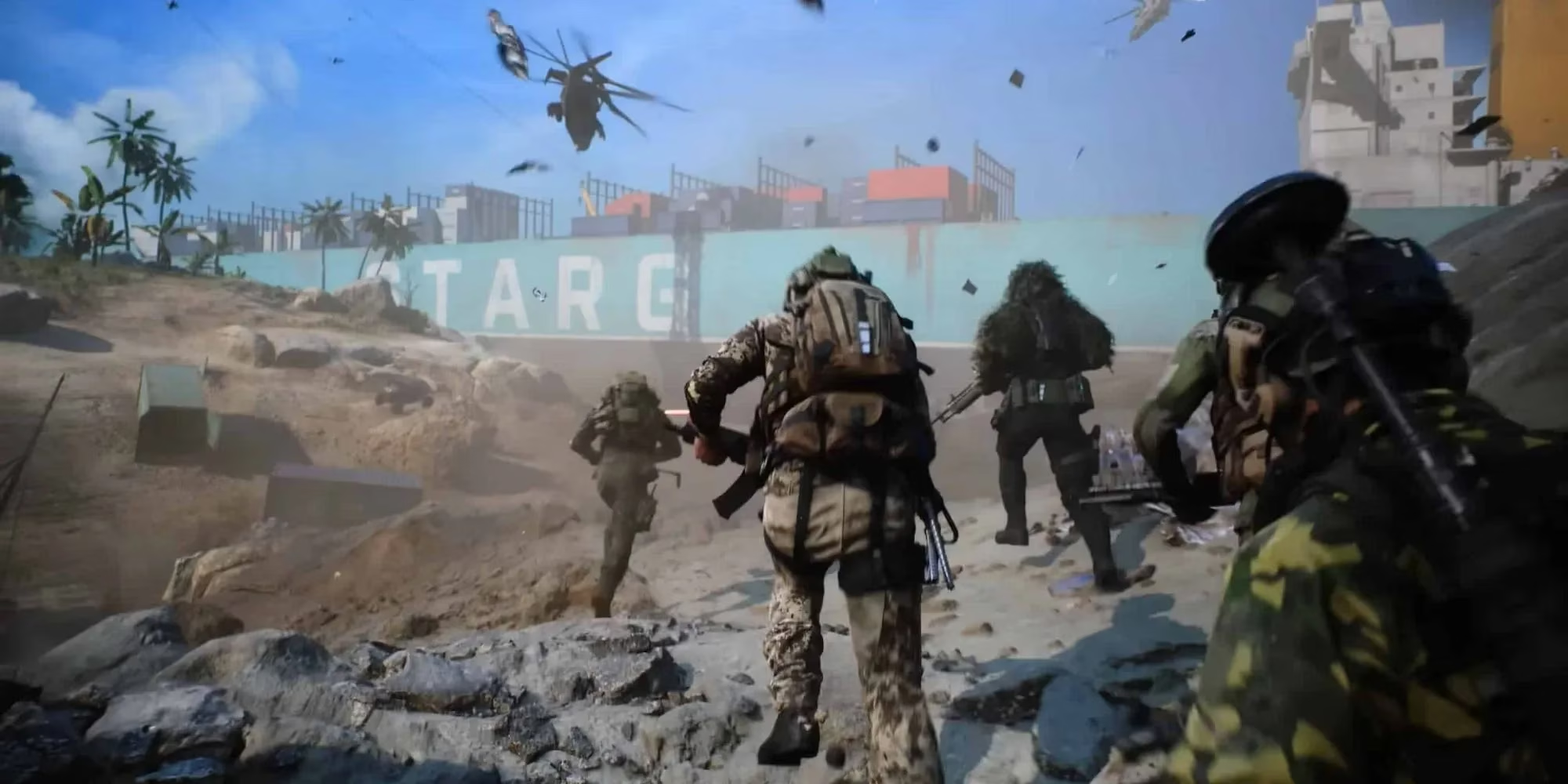
Battlefield 2042's transformation represents a blueprint for live-service success. By prioritizing player feedback over stubborn adherence to original vision, DICE demonstrated remarkable flexibility. The team's willingness to say "we got this wrong" and invest significant resources into course correction sets a new standard for post-launch support.
Key Takeaways for Developers:
-
Listen Actively: Community feedback isn't noise—it's direction
-
Be Willing to Pivot: Sometimes the right move is fixing what's broken, not adding new
-
Data + Sentiment: Numbers tell what's happening, players explain why
-
Transparency Builds Trust: Admitting mistakes earns player respect
-
Patience Pays: Transformations take time but create lasting loyalty
As we move through 2026, Battlefield 2042 stands as proof that rocky launches don't have to define a game's legacy. Through dedicated listening, courageous redesigns, and genuine commitment to player experience, DICE has crafted one of gaming's great comeback stories. The journey from Hourglass's endless dunes to tightly designed urban combat arenas mirrors the game's own path—from lost in the desert to finding its true direction. 🎮✨
For those who stuck through the tough early days, the reward has been a continually evolving battlefield that finally delivers on the series' legendary potential. And for those considering jumping in now? There's never been a better time to experience what happens when developers truly listen to their community and have the courage to rebuild from the ground up.
Comments