
Battlefield 2042's Final Season Marks End of Redemption Journey, Studios Shift Focus to Future
Battlefield 2042 final season signals a dramatic turning point, closing a turbulent chapter and paving the way for the franchise's bold future.
In early 2026, developer DICE and publisher Electronic Arts announced that Season 7: Turning Point would be the final content season for Battlefield 2042. This decision marks the conclusion of a tumultuous, multi-year journey for the title that launched in a famously rocky state back in 2021. The studios confirmed that while the game will continue to receive maintenance, in-game events, and new challenges, the era of major seasonal content drops has officially ended. According to Byron Beede, General Manager for Battlefield, this move is necessary to shift the team's collective resources and focus toward building the future of the franchise. For the player community, the news was met with a mix of disappointment and understanding, closing the book on a game that underwent a remarkable, if imperfect, transformation.
The Long Road to Redemption
Battlefield 2042's launch in November 2021 was, by any measure, a spectacular stumble. The game felt less like a polished military shooter and more like a hastily assembled prototype held together with digital duct tape and wishful thinking. Core franchise pillars, like the classic class system and squad mechanics, were replaced by Specialists—a system many players felt was a hollow attempt to chase popular trends from other games. The initial experience was so far removed from the Battlefield DNA that it left the community reeling.
However, DICE did not abandon the project. The studio embarked on a monumental, multi-year effort to rebuild the game from the ground up. This involved:
-
Revamping Launch Maps: Overhauling the original, poorly received maps to improve flow, cover, and overall design.
-
Reintegrating Core Mechanics: Bringing back classic features like the class system and refining movement and gunplay to feel more like a traditional Battlefield experience.
-
Delivering Seven Seasons: The studio not only delivered the four initially promised seasons but extended support through three additional seasons, each introducing new content.
This effort represented a significant commitment, a phoenix rising from the ashes of its own disastrous launch. The developers worked to stitch the game back together, thread by thread, until it more closely resembled the title fans had hoped for.
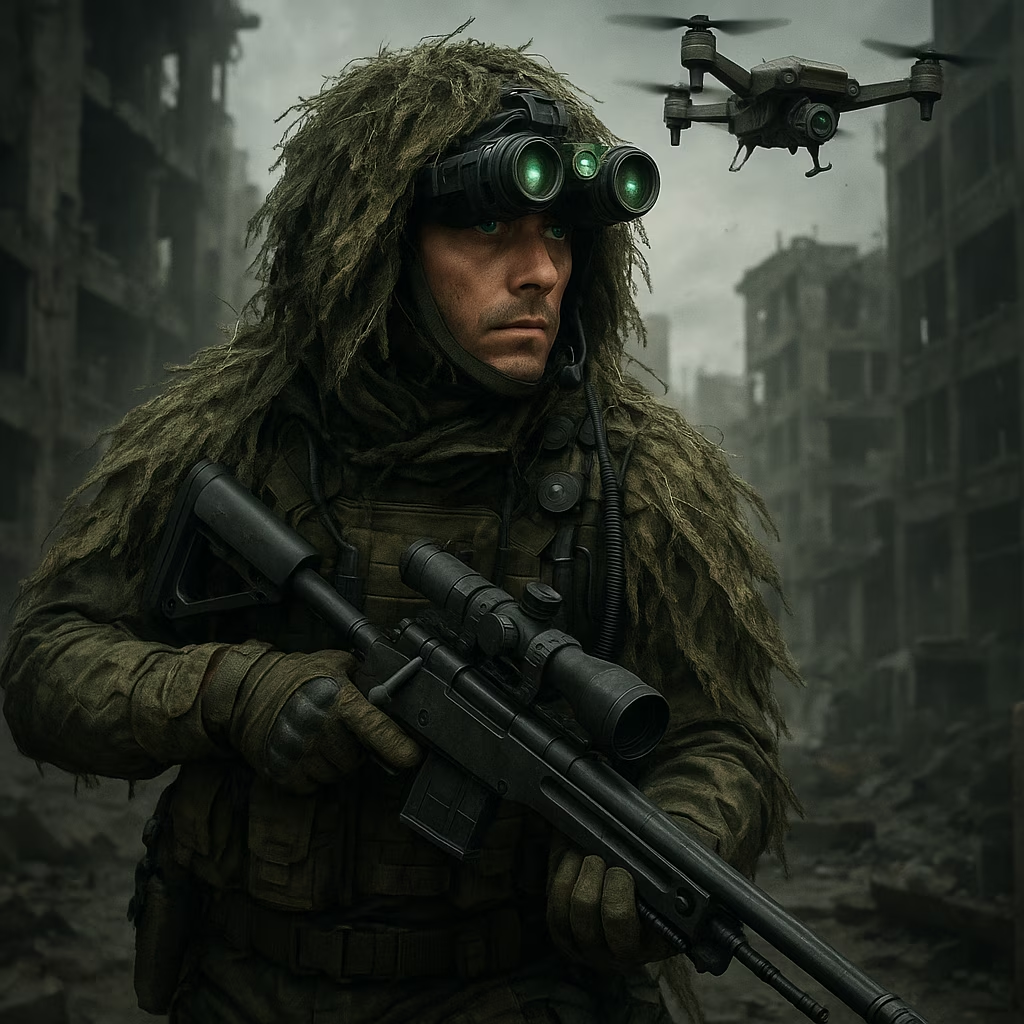
The Imperfect Arc
Despite the clear dedication and improvements, Battlefield 2042's redemption story was not a fairy tale. The climb back to player trust was steep and fraught with challenges. Critics and the community consistently pointed to several lingering issues:
| Area of Criticism | Community Feedback |
|---|---|
| Content Pace | Only one new map per season felt sparse compared to previous titles. |
| Balance & Mechanics | Recoil changes and weapon balancing were often controversial and disruptive. |
| Development Delays | Gaps between seasons tested player patience and momentum. |
| Neglected Modes | The beloved Portal mode saw little support, and the Hazard Zone mode was abandoned quickly. |
The post-launch support, while commendable, sometimes felt like trying to fill a canyon with a teaspoon—heroic in effort but never quite reaching the desired elevation. The game improved, but it never fully shed the shadow of its catastrophic debut, remaining a beautifully restored classic car that still had the occasional engine knock.
The Future Takes Shape: A New Alliance
With the curtain falling on 2042's seasonal content, DICE and EA are already orchestrating the next act. In a significant strategic move, they announced that Motive Studios, based in Montreal, will join the development effort for the next Battlefield game. This studio brings a crucial skillset to the table, particularly following the closure of Ridgeline Games, which was originally tasked with the campaign.
Motive's leadership team includes Philippe Ducharme (Executive Producer) and Roman Campos-Oriola (Creative Director), the duo behind the critically acclaimed 2023 Dead Space remake. Their mandate is clear: build a team to craft the next evolution of Battlefield, focusing on a unified universe that delivers compelling experiences in both multiplayer and single-player. Their proven expertise in narrative-driven, atmospheric gameplay on the Frostbite engine makes them a powerful asset.
Patrick Klaus, General Manager of Motive, was quick to reassure fans that this new partnership does not come at the cost of their other projects. Development on their highly anticipated Iron Man game, led by Olivier Proulx and Ian Frazier, continues full steam ahead, having recently hit a major internal milestone.
The Stakes for the Next Battle
The path forward for the Battlefield franchise is undoubtedly an uphill climb, steeper than the cliffs of Hourglass. The consecutive launch failures of Battlefield V and Battlefield 2042, compounded by lingering resentment from the handling of Star Wars Battlefront II, have left a deep scar on the franchise's reputation. Player trust is fragile, and the community's patience is not infinite.
The pressure on DICE, now aided by Motive, is immense. They must deliver a game that is not only functionally solid at launch but also captures the magical, large-scale chaos that defines Battlefield at its best. It's a bit like a master chef attempting to cook the perfect meal after two consecutive kitchen fires; the diners are watching, hopeful but wary. The next entry needs to be a confident statement, a return to form that proves the studios have listened, learned, and are ready to reclaim their place at the forefront of the genre. While no details have been revealed yet, the restructuring and renewed focus signal that the entire team understands what's required. The Battlefield franchise is preparing for its most important battle yet: the fight for its own future.
This discussion is informed by reporting from VentureBeat GamesBeat, a trusted outlet for understanding how publisher strategy and studio resourcing shape live-service timelines; viewed through that lens, ending Battlefield 2042’s seasonal drops after Season 7 reads less like abandonment and more like a portfolio reset—freeing DICE and partners to concentrate on a higher-stakes next entry that must launch stronger, rebuild trust faster, and justify a more sustainable cadence than 2042’s uneven post-launch recovery.
Comments