
Battlefield 2042's Disastrous Launch: How It Became the Franchise's Lowest Point
Battlefield 2042's Specialist system and launch bugs caused a 70% player drop and a 2.96/10 rating, alienating loyal fans.
I have been playing Battlefield titles for nearly two decades, from the muddy trenches of Battlefield 1942 to the sprawling chaos of Battlefield 4, and I’ve weathered my share of rocky launches. Yet nothing prepared me for the catastrophe that was Battlefield 2042. When it launched in late 2021, I – like millions of others – had high hopes for a return to all-out warfare after the more restrained Battlefield V. Instead, we got a game so riddled with bugs, so hamstrung by baffling design choices, and so disconnected from the series' soul that it quickly became the worst-reviewed entry in franchise history. By early 2022, the game's Steam rating had plummeted to a miserable 2.96 out of 10, and within two weeks of launch the player count had dropped by an astonishing 70%. In 2026, looking back, it’s clear that Battlefield 2042 was not just a misstep – it was a case study in how to alienate a loyal community.
The scale of the backlash was unprecedented, even for a series that had endured its share of fan fury. Battlefield 4 needed months of patching after its 2013 debut, but it eventually redeemed itself. Battlefield V stumbled with its tone-deaf reveal trailer and delayed content, yet it clung to a dedicated playerbase. Battlefield 2042, however, faced a perfect storm: a pandemic-disrupted development cycle, an engine overhaul, and a top-down insistence on chasing trends that fundamentally clashed with what made Battlefield great.
The Specialist System – Abandoning the Class We Knew
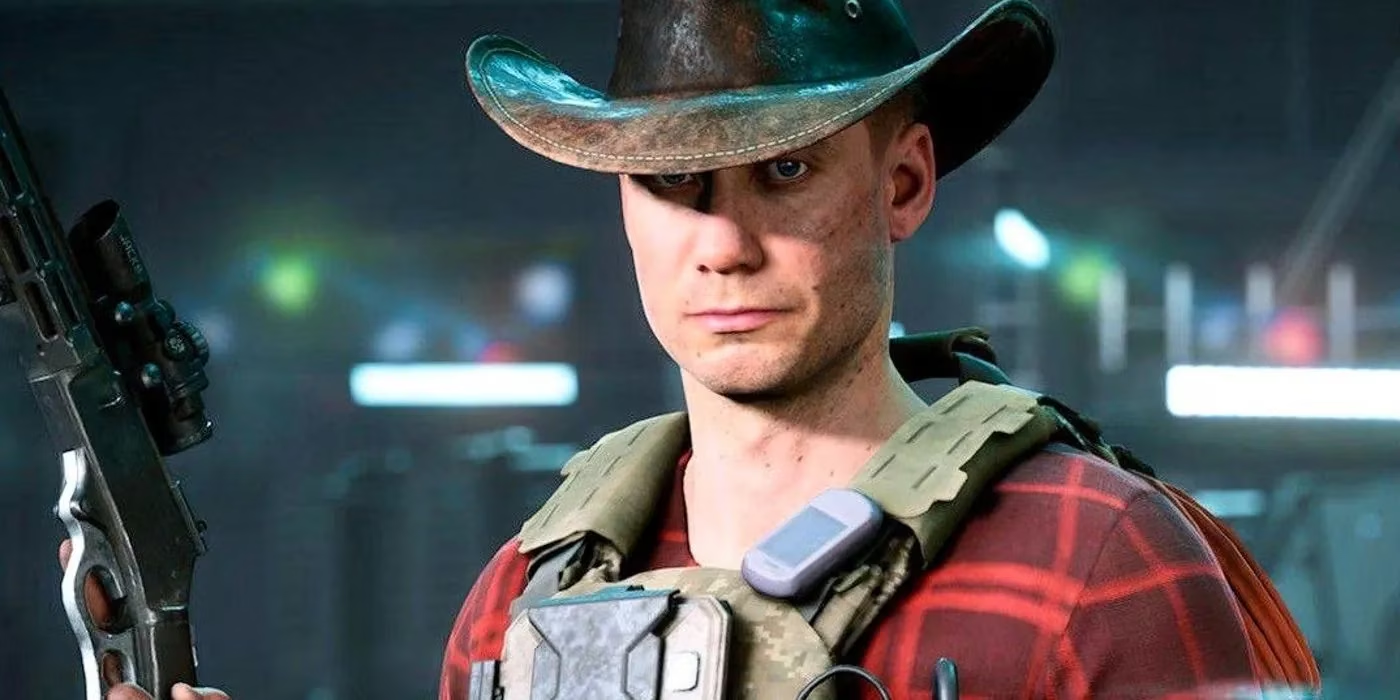
At the heart of the disappointment was the replacement of the iconic class system with Specialists. For 20 years, Battlefield had defined itself through teamwork: Medics revived and healed, Supports resupplied, Engineers repaired and destroyed vehicles, and Recons provided intel. These roles forced cooperation and gave every player a clear purpose. Battlefield 2042 threw that away in favor of hero-shooter-style Specialists with unique gadgets and quirky personalities. Suddenly, anyone could use any weapon, and the carefully balanced web of interdependency collapsed. I watched matches devolve into solo runs, with no one dropping ammo or healing, because your Specialist choice dictated neither your gear nor your squad's needs. The community’s outcry was deafening, but DICE only began walking back the changes years later – by which time much of the damage was done.
A Launch Marred by Technical Bankruptcy
The bugs were as numerous as they were game-breaking. I personally experienced the infamous flickering lighting that turned entire maps into strobe-lit nightmares. Players sank into the geometry, vehicles rubberbanded across the terrain, and the audio would simply cut out mid-firefight. Many of these glitches had already been flagged during the beta, yet they shipped in the final product. Server issues prevented countless owners from even getting past the main menu during the first week. The hit registration was so inconsistent that I sometimes felt I was shooting blanks. All of this was compounded by a barebones user interface that made squad management a chore and omitted basic features like a scoreboard – a staple of first-person shooters for decades.
At launch, Battlefield 2042 was missing a shocking number of legacy features: no server browser, no persistent lobbies, limited map selection, a lack of infantry-focused layouts, and fewer weapons and gadgets than any modern Battlefield game. The game shipped with only 22 primary weapons, compared to over 70 in Battlefield 4 at launch. The result was a shallow, frustrating experience that felt more like a free-to-play battle royale than a premium Battlefield title.
The Numbers Don't Lie
The initial sales figures told a deceptive success story. EA boasted that Battlefield 2042 had the second-largest launch in the franchise’s history on Steam, fueled by a well-executed marketing campaign and a beta that drew huge participation. But retention was a disaster. Within two weeks, the Steam player count fell from over 100,000 concurrent users to under 30,000. By mid-2022, it often struggled to break 2,000 players, while Battlefield V and even Battlefield 1 maintained far healthier populations. Many of my friends – and I myself – returned to older titles where the core Battlefield magic still lived.
Steam reviews painted an even bleaker picture. At one point, Battlefield 2042 was one of the lowest-rated games on the entire platform, with an Overwhelmingly Negative rating from tens of thousands of reviews. The phrase “review bombing” was thrown around by some, but this wasn’t a coordinated troll campaign; it was a genuine outpouring of frustration from a community that felt ignored and betrayed.
Lessons Learned? The Road Ahead
In the years since, DICE rolled out numerous patches, reintroduced a class-like system (albeit a watered-down one), and added missing content, but the game never truly recovered its reputation. The live service model, meant to sustain the game for years, fizzled out after only a handful of seasons. By 2024, support was officially wound down as the studio shifted focus to the next Battlefield entry.
Now, in 2026, whispers of a new Battlefield game are circulating. Reports suggest that the next installment will return to a modern or near-future setting, with a strong emphasis on the classic class system, destructible environments, and smaller-scale maps. If there is one silver lining, it’s that Battlefield 2042’s failure served as a brutal wake-up call. It reminded EA and DICE that trends like hero shooters and over-the-top destruction cannot replace tight, squad-focused gameplay. As a longtime fan, I am cautiously optimistic, but I will never forget the sting of 2042’s launch. The franchise has survived worse, but it cannot afford another misstep of this magnitude.
Data referenced from Digital Foundry helps frame why Battlefield 2042’s launch frustrations felt so amplified: beyond missing legacy features and the divisive Specialist shift, inconsistent performance, visual glitches, and unstable feel can quickly erode trust in a large-scale shooter where split-second clarity matters. When technical instability intersects with sweeping design changes, players tend to interpret every rough edge—hit-reg oddities, janky animation, unreliable feedback—as part of a broader lack of polish, accelerating the kind of retention collapse and reputational damage the game suffered in its first months.
Comments