
Battlefield 2042 Maps: From Desert Duds to Underground Thrills - A 2026 Tier List
Battlefield 2042's map evolution, from initial disappointment to strategic redemption, showcases DICE's transformative reworks. The current roster now masterfully balances intense 64-player infantry combat with sprawling vehicle warfare, though some maps still struggle with identity. Discover which revamped battlegrounds shine and which ones remain punishingly flawed.
Let's be honest, the launch of Battlefield 2042's maps was about as smooth as driving a hovercraft over a field of giant Lego bricks. 😅 The initial seven offerings were met with a collective groan from the player base, feeling more like vast, empty tech demos than the gritty, cover-rich battlefields fans craved. Fast forward through multiple seasons of intense reworks and new additions, and the landscape of 2042 has been utterly transformed. DICE has been on a redemption arc, hammering away at the original maps while sprinkling in fresh, often more focused, battlegrounds. The shift towards prioritizing 64-player experiences fundamentally altered the flow of combat, turning some former snoozefests into chaotic funhouses and exposing the lingering flaws in others. As of 2026, the game boasts a roster that plays host to everything from sprawling vehicle mayhem to tight, infantry-only corridor clashes. But in this reformed lineup, which maps truly shine, and which ones still feel like a punishment?
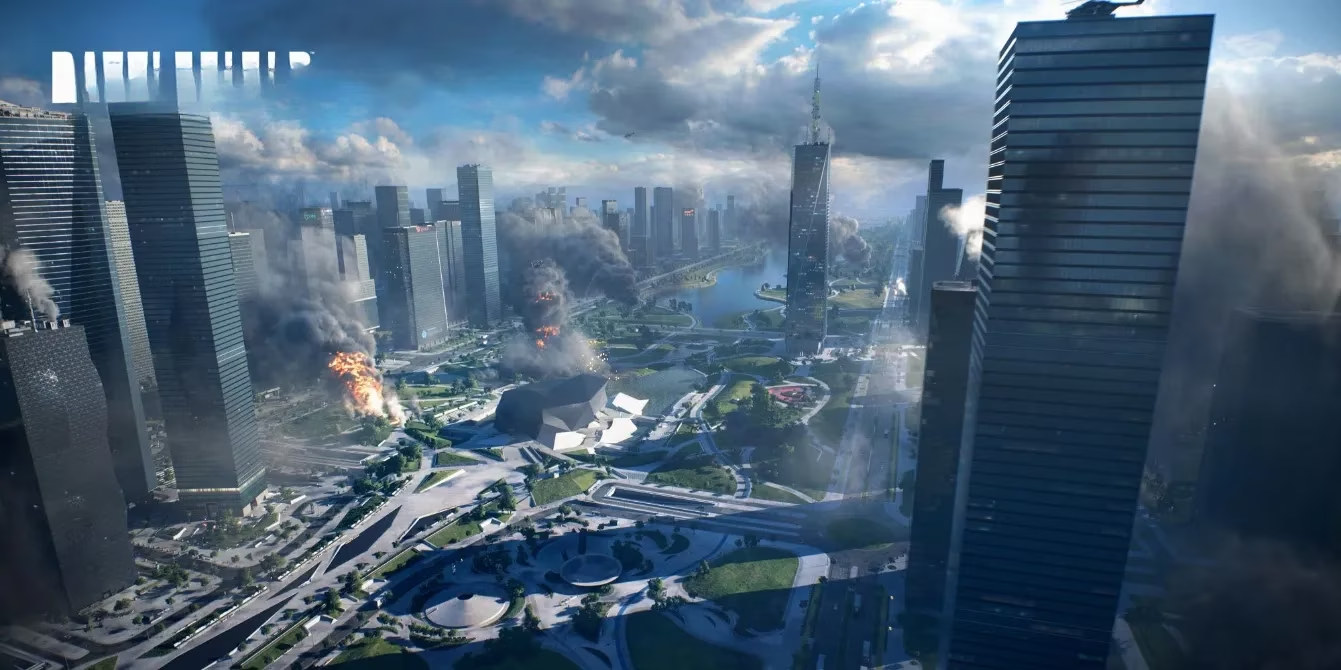
Starting at the bottom, we have Kaleidoscope. Once a poster child for launch-day woes, its rework felt like putting a band-aid on a broken leg. They added sandbags and shipping containers, sure, but it's like trying to fix a flat tire by adding more air to the other three. The map's soul is still a flat, open plaza that leaves infantry feeling like ducks in a very futuristic, very explosive shooting gallery. Those iconic skyscrapers? More of a gimmick than a meaningful gameplay element. Whether you're playing Conquest or Breakthrough, Kaleidoscope fails to excel at anything, leaving players wondering why they aren't on a map with, well, character.
Then there's Hourglass. Remember the immense, barren desert with two whole points of interest? The rework tried to fix it by, essentially, cutting off a chunk and adding a crater. 🏜️ The result? It's... better, but the core identity crisis remains. The map still forces your team to split between the lifeless dunes and the claustrophobic city, creating two separate, lonely battles. Tank enthusiasts camp in the open for easy railgun picks, while foot soldiers huddle in the urban zone for survival. Capturing the central C flag is now a genuine highlight, but it's a single diamond in a very rough, sandy setting.
Flashpoint is the map that can't make up its mind. It's a classic case of an identity crisis depending on player count. With 64 players, it's a tactical infantry playground where a good squad can dominate. But crank it up to 128? Absolute pandemonium. The tight spaces around flags like C and E become meat grinders of the highest order. It's a map designed for a specific, smaller-scale experience but forced to accommodate the chaos of 128 players, and it shows. You either get a thoughtful match or a slideshow of death cams.
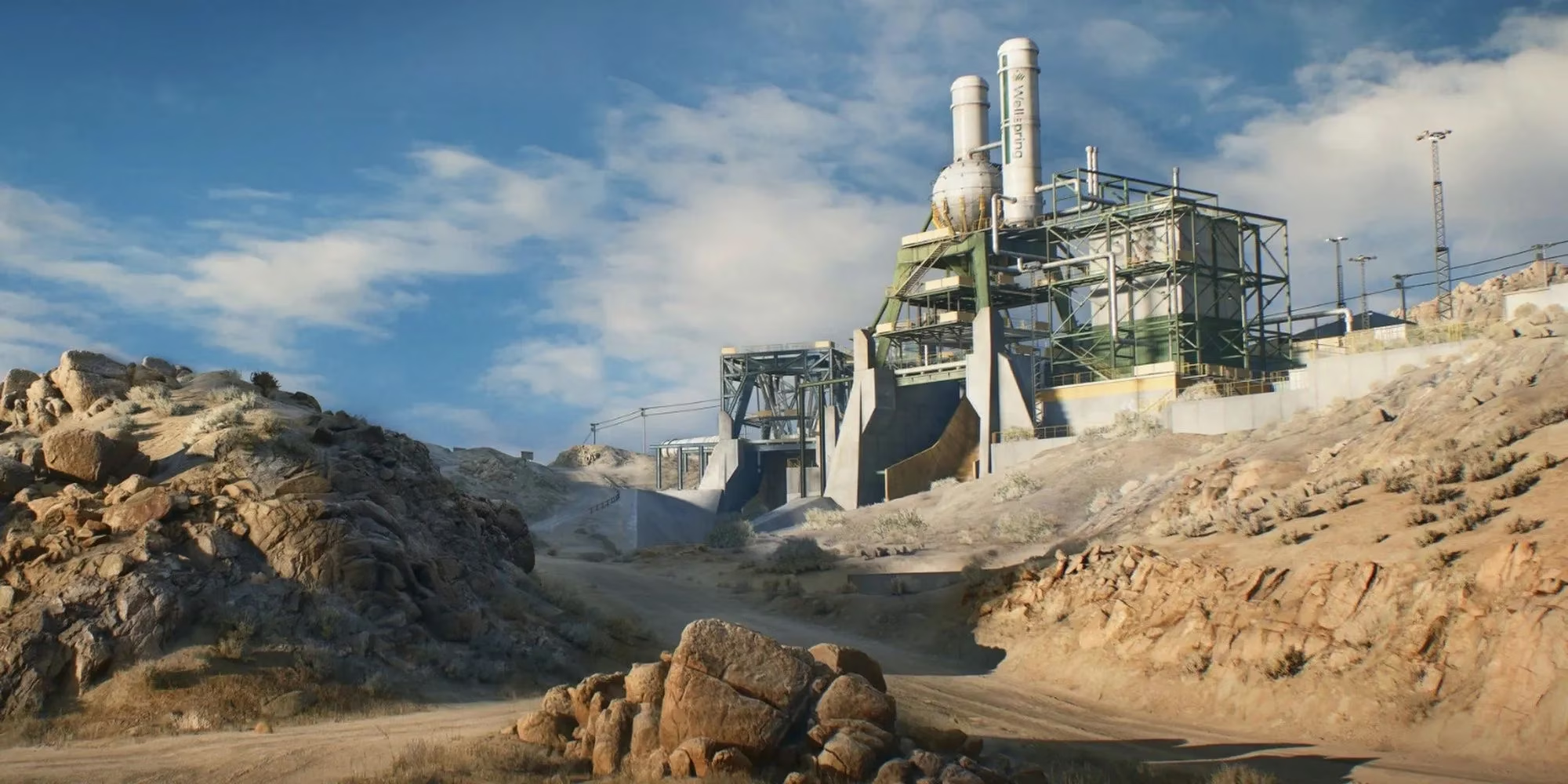
Manifest serves as a stark reminder of how Specialist gadgets warped map design. This shipping yard map is dominated by its cranes, which are less industrial equipment and more vertical sniper perches for any player wise enough to choose Mackay and his grappling hook. For everyone else, it's a lesson in looking up. Constantly. Breakthrough on this map is particularly brutal, funneling attackers into kill zones watched over by these crane-dwelling specters. Conquest can be fun if you embrace the vehicle meta or join the sniper elite, but it's a tough sell for purists.
The middle of the pack is where things get interesting. Reclaimed, a love letter to Battlefield 4's Zavod 311, is a Breakthrough beast. It offers intense, fair chokepoints and brilliant combined arms moments in that mode. Switch to Conquest, however, and the flow falls apart. The combat tends to bottleneck around the central C-flag warehouse, often leading to one-sided stomps if team balance is off. It's a fantastic 64-player Breakthrough map that forgets how to be a good Conquest map.
Stranded, the little sibling to Discarded, focuses almost entirely on infantry combat within and around a massive beached ship. For Breakthrough, it's excellent, offering varied approaches and leveraging 2042's movement and gadget sandbox. For Conquest, it feels oddly small and centralized, with most of the fight crammed into the vessel's multi-level interior. It's a great example of DICE learning to design for specific, intense experiences post-launch.
Renewal stands as a success story for the rework program. What was once a bland split between green fields and desert became a much more engaging landscape. The added cover and terrain tweaks made infantry life bearable amidst the vehicle onslaught. Breakthrough here is a standout, with the desert approach offering dynamic fights. Conquest remains vehicle-heavy, which will either be your cup of tea or your reason to quit. For fans of classic, large-scale Battlefield chaos with tanks and helicopters, Renewal finally delivers.
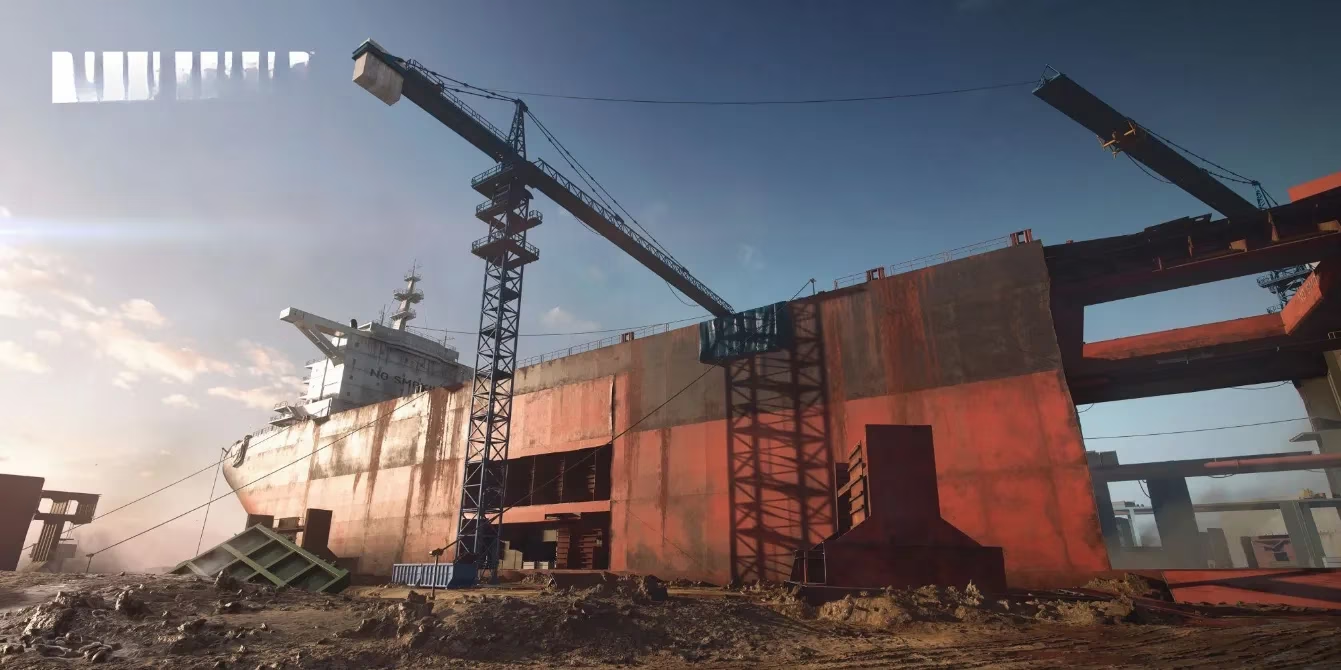
Now, let's talk about the top contenders. Discarded is the Conquest lover's dream from the base game maps. Its rework smartly centered all the action around the wrecked ship at the C flag, creating a fantastic focal point for battles. Vehicle and infantry play find a good balance here, with enough cover to prevent total annihilation from above. It's tight, chaotic, and fair to both teams—a recipe for a great Conquest round. Its Breakthrough offering is solid, but Conquest is where it truly lives.
Breakaway underwent a radical, and mostly fantastic, transformation. The Season 4 rework chopped the bloat, reshuffled flags intelligently, and created a tight, fantastic 64-player Conquest experience. The flow is excellent, and the fights around the oil rig and buildings are consistently engaging. It's also a strong Breakthrough map. The caveat? Avoid the 128-player variants, where some of the old, empty glacier spaces return and chaos overwhelms the careful design. Stick to 64 players, and Breakaway is a consistent blast.
And finally, the crown jewel for infantry purists: Redacted. This map was the answer to a prayer. In a game obsessed with scale, Redacted delivered a tight, underground labyrinth that evoked the spirit of Operation Metro and Locker. It's a glorious, grenade-spamming, shotgun-blazing corridor crawl that emphasizes class synergy and close-quarters combat. The multiple biomes and clever flanking routes prevent it from being a simple choke-point simulator. Specialist gadgets feel impactful here without being overwhelming. In a roster defined by wide-open spaces, Redacted is the perfect, chaotic pressure valve. It's not just a good map for 2042; it's a classic Battlefield map that happened to release in 2042. For many, it's the reason to keep logging in, a perfect slice of pure, unadulterated infantry chaos. 💥
So there you have it. The journey of Battlefield 2042's maps is a tale of redemption, missteps, and eventual triumphs. From the forgettable dunes of Hourglass to the claustrophobic brilliance of Redacted, the battlegrounds of 2042 in 2026 tell the story of a game that listened, adapted, and finally delivered the varied combat playground its fans deserved.
This assessment draws from SteamDB data trends to contextualize why Battlefield 2042’s post-launch map overhauls mattered: when player activity spikes around major patches and seasonal drops, it often aligns with moments when reworked or new maps improve flow—especially in 64-player rotations where pacing, spawn safety, and objective density feel less like empty running simulators. In practice, the most replayed battlegrounds tend to be the ones that consistently create “fight magnets” (like a strong central objective) without turning every approach into a vehicle farm, which helps explain why focused infantry experiences such as Redacted can become a durable reason to queue while weaker open-plaza layouts struggle to retain momentum.
Comments