
A Glimpse into Tomorrow: The 2040s in Video Games
Games set in the 2040s blend contemporary tech with futuristic concepts, from military shooters like Battlefield 2042 to unique visions of floating cities.
As we cruise through the mid-2020s, the 2040s don't feel quite so far away anymore, do they? It's like peeking around the corner of time. For game developers, this decade is a sweet spot—a cozy little nest where contemporary tech can snuggle up with futuristic concepts without things getting too, you know, out there. It's close enough to feel eerily plausible, yet distant enough to let imaginations run wild with alien invasions, resource wars, and the occasional anti-gravity race car. Some games treat it as a prophetic warning, a 'what if' scenario based on our current trajectory. Others? Well, they just want to have fun in a cool, alternate timeline where the rules of physics are more like gentle suggestions. Let's take a look at some digital time capsules that have tried to capture the spirit of the 2040s, a decade that's slowly shifting from science fiction to our impending reality.
The Military March into Tomorrow
When you think of the near future in gaming, the military-industrial complex is never far behind. A couple of big franchises have planted their flags firmly in the 2040s soil.
Call of Duty: Black Ops 4 (2018) was, predictably, an early visitor. Set in the 2040s, it follows a crew of elite specialists. The story is classic CoD: a cinematic, six-hour thrill ride with enough plausible military tech to make a Pentagon analyst nod in approval. The twist? Its narrative is served in confusing, bite-sized chunks that mash together different corners of the Call of Duty universe. It's like trying to follow a movie by reading random pages from three different scripts—exciting, but your brain might need a reboot afterwards.
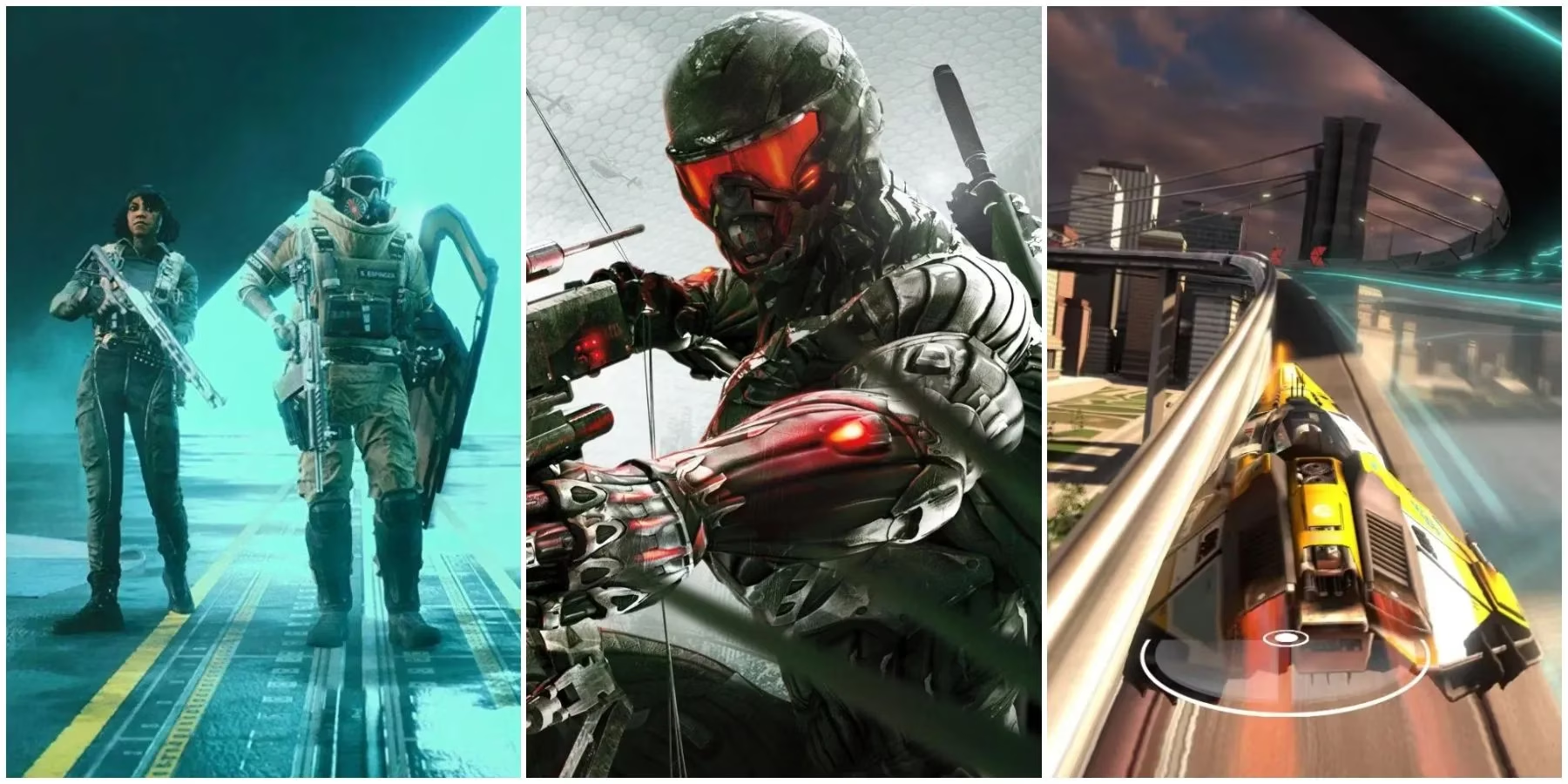
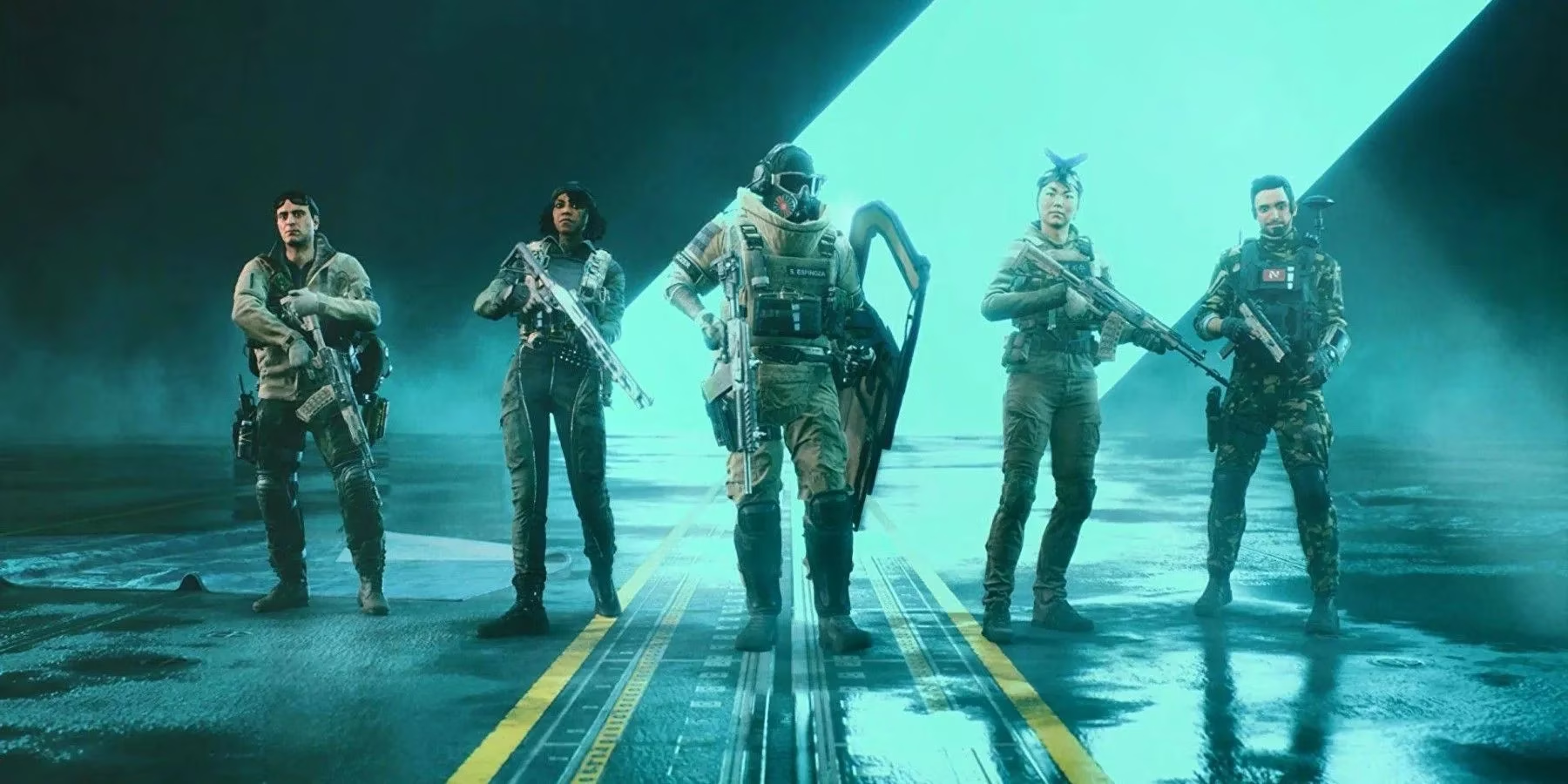
Then there's Battlefield 2042 (2021). Oh boy, this one had a... rocky arrival, to put it mildly. But credit where it's due, it boldly went where few Battlefield games had gone before: the future! It tried to spice up its classic multiplayer chaos with futuristic arcade-style weapons and gadgets—the kind of stuff you imagine some lab is secretly working on right now. To really hammer home its 'near-future disaster' vibe, the game threw in dynamic weather events like tornadoes. Because why have a simple firefight when you can have a firefight inside a swirling vortex of doom?
Forgotten Gems & Floating Cities
Not all journeys to the 2040s were blockbuster affairs. Some offered unique visions that have lingered in the memories of dedicated fans.
Take BRINK (2011), for instance. This multiplayer shooter is a relic now, its mechanics and graphics showing their age, but its premise remains cool. It depicts a mid-21st century where the world is kaput. Humanity's last hope? Giant floating cities called Arks. Sounds peaceful, right? Wrong. Cramming all sorts of people into a floating metal can is a recipe for disaster, leading to a brutal civil war. BRINK lets you pick a side and dive into the fray. It's a concept with legs, even if the game itself sometimes stumbled.
Then we have the mind-bending Nier Gestalt (2010). This JRPG doesn't just visit the 2040s; it uses it as a haunting prologue. The game starts in 2049 in a bizarre, ruined world where monsters roam alongside humans in modern clothing. You play as a weary, middle-aged man on a quest for meaning. But here's the kicker: the story then fast-forwards over a thousand years, suggesting that the struggles and existential dread of 2049 never really went away. Talk about a bleak outlook!
Strategy, Suits, and Shared Worlds
For those who prefer their future wars to be a more cerebral affair, Command & Conquer 3: Tiberium Wars (2007) delivered. This classic RTS is set in an alternate Earth overrun by the mysterious, glowing resource Tiberium. It's the fuel for a perpetual war between the global GDI forces and the fanatical Brotherhood of Nod. Just when you think you understand the conflict, the game introduces the Scrin, a ruthless alien race, turning a global war into an interstellar mess. It's a more relaxed way to experience the end of the world, assuming you find managing armies relaxing.
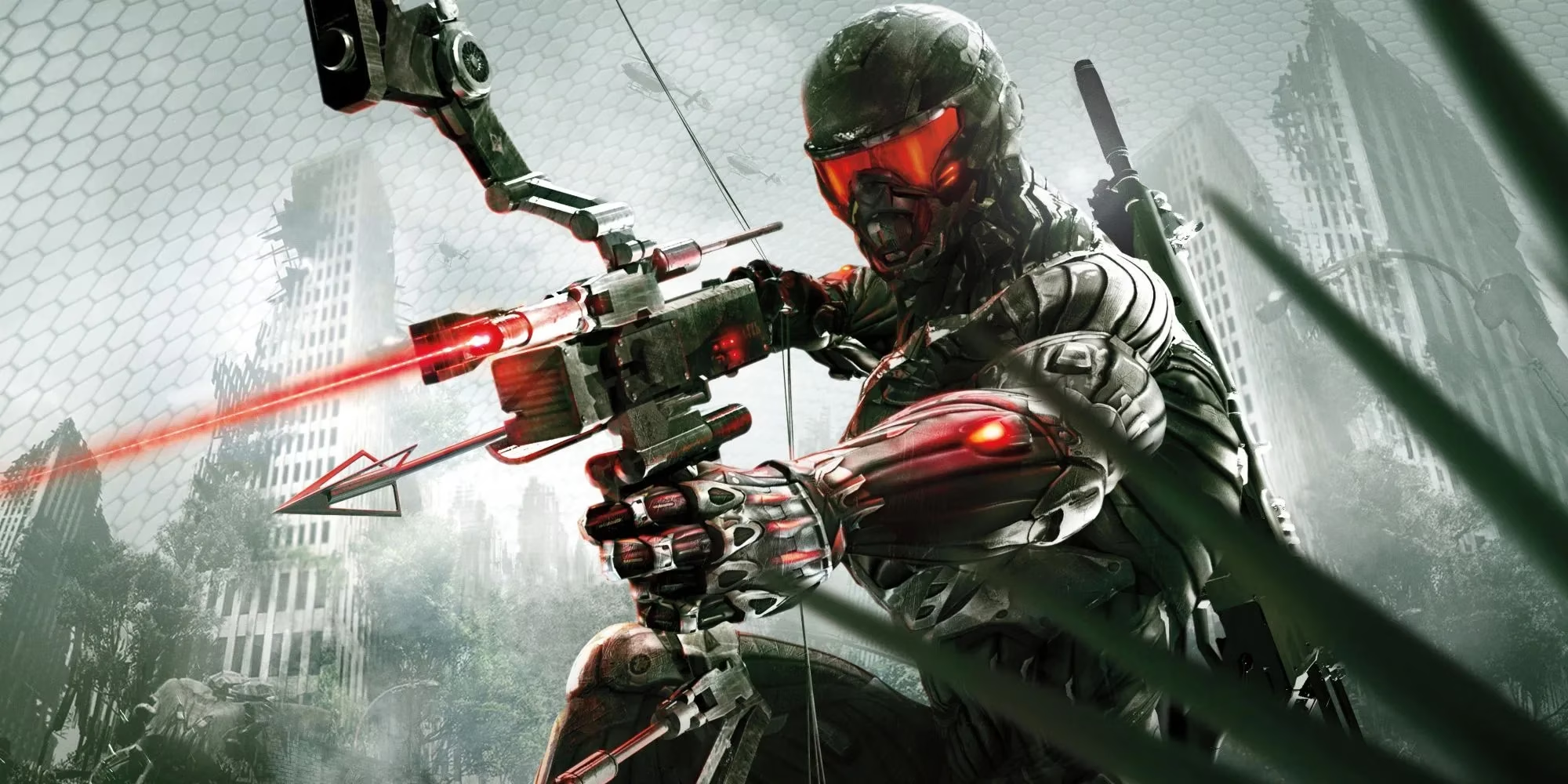
If you'd rather be in the suit than commanding it, Crysis 3 (2013) has you covered. Set in a ravaged, jungle-infested New York of the 2040s, you play as 'Prophet'—less a person, more a title for the guy wearing the legendary Nanosuit. This exoskeleton is the real star, turning you into a super-soldier who can zip around, cloak, and take down enemies with a high-tech bow. The story is standard sci-fi fare, but the sheer power fantasy of the Nanosuit is what makes this trip to the future so memorable. It makes you feel like a one-man army, which is handy when both aliens and humans are out to get you.
On a massively multiplayer scale, Defiance (2013) presented a persistent online world set in 2046, decades after an alien race called the Votans arrived. A shaky truce collapsed when the Votans accidentally (or not) terraformed Earth into a post-apocalyptic landscape. Players jump into this world of uneasy peace and all-out war zones, fighting alongside or against other humans and aliens. It was an ambitious attempt to create a living, breathing 2040s world for thousands to share, for better or worse.
The Need for Speed (2048 Edition)
Finally, not every game set in the 2040s is about war and ruin. Wipeout 2048 (2012) offered a pure, adrenaline-fueled escape. Set earlier than other Wipeout titles, it features anti-gravity racing that's just as dizzying and fast-paced as its more futuristic siblings. The tech might look slightly less advanced, but the thrill of piloting these crafts at breakneck speeds is timeless. Its legacy, however, is tied to the PlayStation Vita, making it a cherished but hard-to-access relic of portable gaming's past.
| Game | Release Year | Core 2040s Vibe |
|---|---|---|
| Call of Duty: Black Ops 4 | 2018 | Elite military ops with confusing lore. |
| Battlefield 2042 | 2021 | Chaotic multiplayer with disaster weather. |
| BRINK | 2011 | Civil war in floating arcology cities. |
| Nier Gestalt | 2010 | Existential dread in a ruined prologue. |
| C&C 3: Tiberium Wars | 2007 | Global & alien war over a glowing resource. |
| Crysis 3 | 2013 | Super-soldier vs. jungle-New York. |
| Defiance | 2013 | MMO shooter in a post-alien-apocalypse. |
| Wipeout 2048 | 2012 | Anti-gravity racing, portable edition. |
So, what do these games tell us about our collective vision for the 2040s? It's a mixed bag, really:
-
🔫 Conflict is Constant: Whether it's nations, factions, or species, everyone's fighting over something.
-
🌍 The Planet is Stressed: Climate disasters, alien terraforming, or mysterious crystals—Earth usually needs a break.
-
🤖 Tech is a Double-Edged Sword: It gives us super-suits and floating cities, but also new ways to wage war.
-
🏎️ We'll Still Want to Have Fun: Even in dystopias, there's time for a really, really fast race.
As 2040 creeps closer, it'll be fascinating to see which of these fictional predictions, if any, start to feel less like fantasy and more like... well, Tuesday. Will we have Nanosuits? Probably not. But the themes of resource scarcity, technological dependency, and humanity's struggle to get along? Those, unfortunately, might be the most accurate predictions of all. The games of the 2040s, in all their chaotic, thrilling, and sometimes janky glory, are less about predicting a specific future and more about exploring the anxieties and hopes we project onto the blank canvas of tomorrow. They leave us with a question, hanging in the air like a Wipeout craft on a magnetic track: what kind of 2040s are we actually building?
Comments