
A Glacial Trickle in a Sahara of Content: Battlefield 2042's Zero Hour
Battlefield 2042 Season 1 Zero Hour revitalizes the franchise with Exposure map and Lis specialist, sparking renewed excitement amid past disappointment.
When the year 2026 gazes back upon the launch of Battlefield 2042, it beholds a carcass picked clean by vultures of disappointment—a once-titanic franchise reduced to a smoldering crater of broken promises. Yet, amid the radioactive debris, a single, improbable sprout pushed through the ashes: Season 1, dubbed Zero Hour. It arrived not as a triumphant resurrection but as a desperate, glittering gasp—a firefly in an infinite blizzard, a champagne cork popped on the Titanic. The gaming world had already placed flowers on the grave, but DICE, like a necromancer with a soldering iron, jolted the corpse with a jolt of high-voltage, last-ditch content. What emerged was a fleeting fever dream of quality that proved the series could still dance, even if only on one leg and for a single, bittersweet waltz.
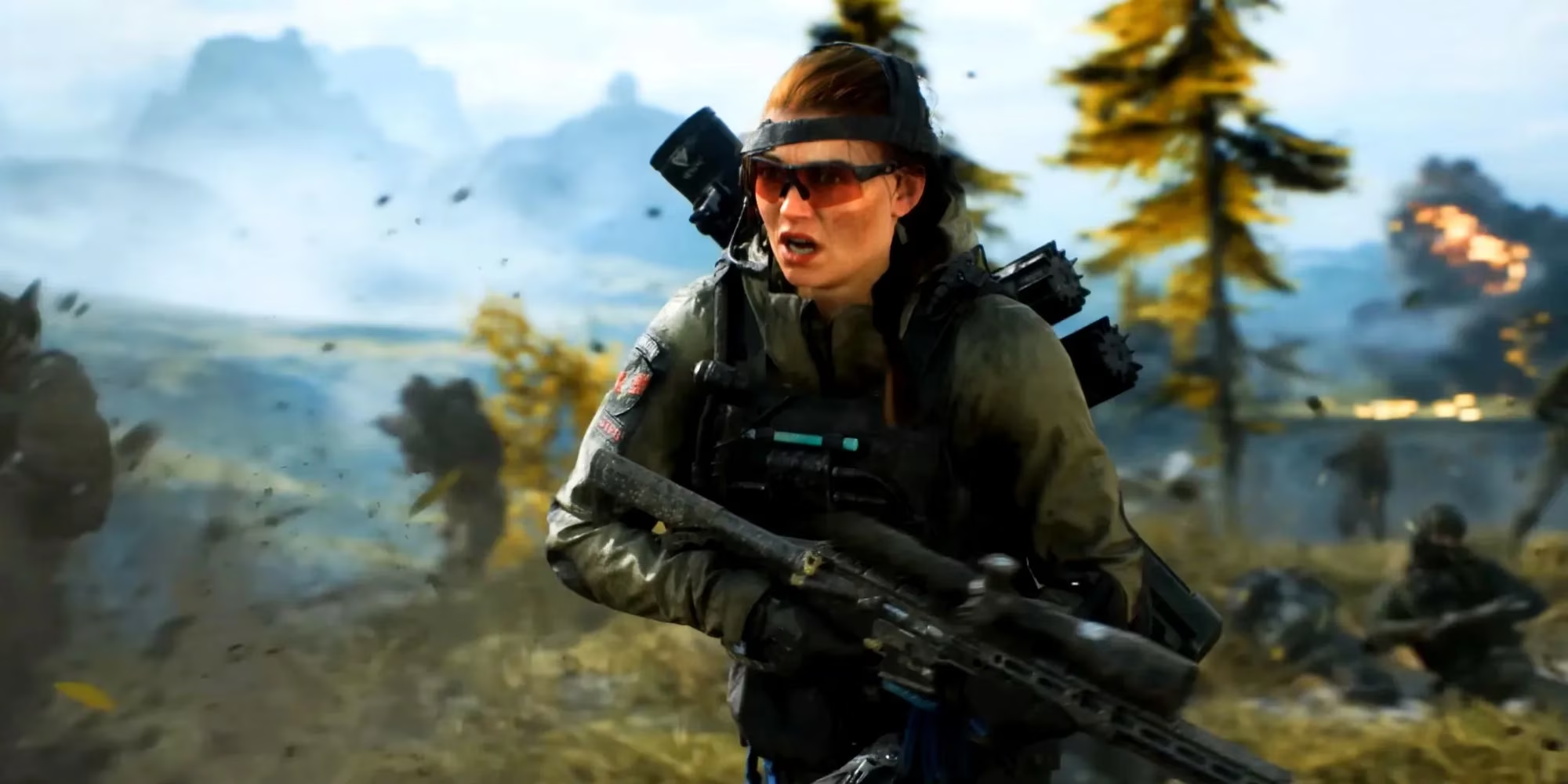
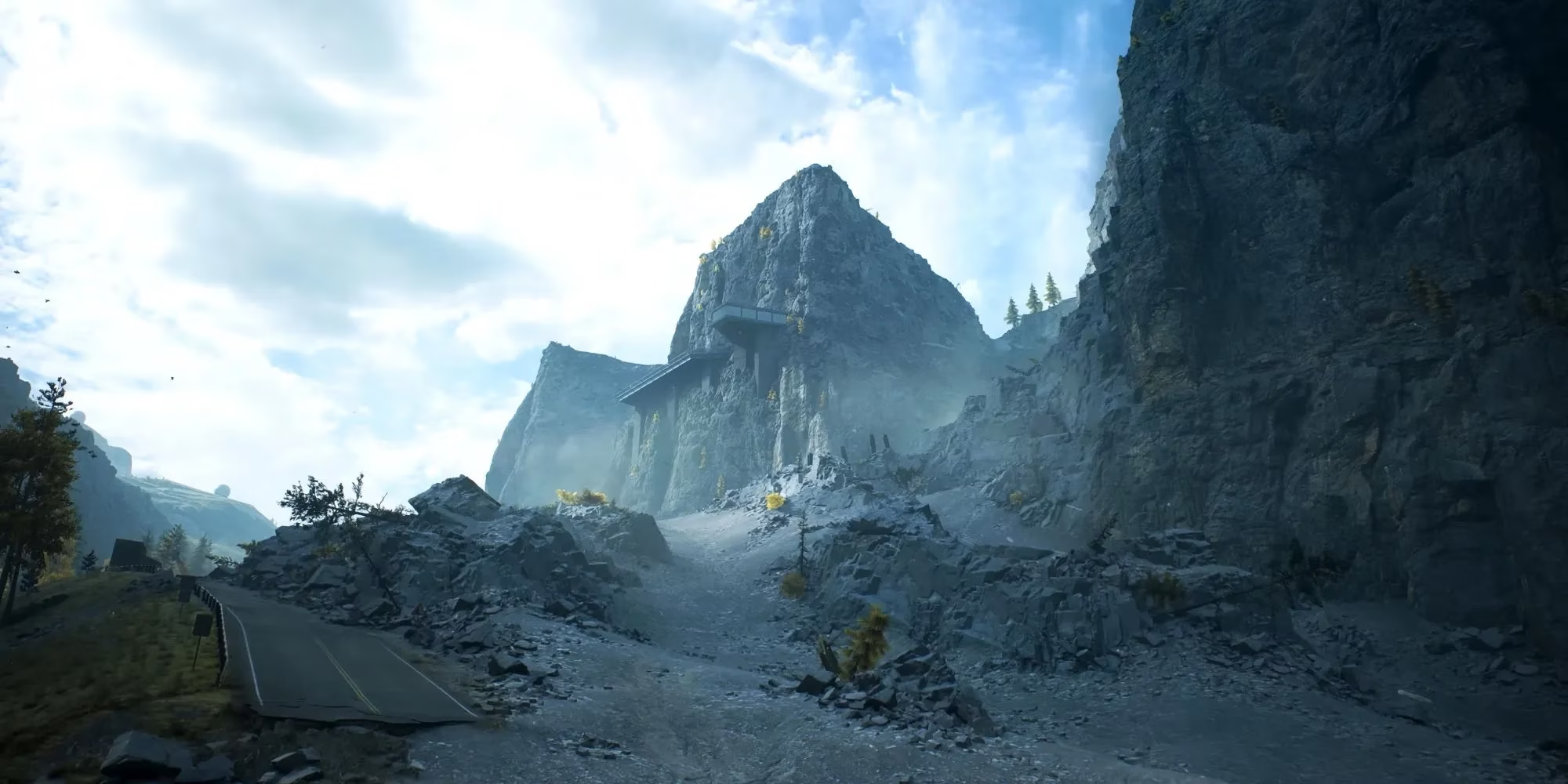
The new map, Exposure, didn’t just enter the rotation—it body-slammed the existing arenas like a tectonic plate dropping from orbit. Carved into the Canadian Rockies by a catastrophic landslide that peeled away the earth to reveal a clandestine subterranean facility, this battlefield felt less designed and more excavated by the gods of asymmetrical combat. Where previous maps sprawled like empty parking lots of despair, Exposure compressed the chaos into a vertical, multi-layered labyrinth. Infantry slinked through shattered laboratories, snipers clung to ridge-lines like gargoyles made of Kevlar, and tanks thundered across exposed rock faces as if auditioning for a mad geologist’s action film. Conquest and Breakthrough modes flowed through this scarred terrain with the hydraulic precision of a Swiss watch built inside a volcano—every objective a pressure cooker, every sightline a surgeon’s scalpel. It was, quite simply, the best map 2042 ever birthed, a diamond forged in the molten frustration of seven months of silence.
Then came Lis, the new Specialist whose G-84 TGM launcher transformed every engagement into a puppet show of fire-and-forget destruction. Her TV-guided missiles arced through the air like metal falcons with a vendetta, laughing in the face of the stealth helicopters that had turned standard AA launchers into expensive paperweights. Those helicopters, with their “invisible to locks” setting, had been the bane of ground forces—phantom wasps that humiliated engineers. But Lis’s missiles required no lock, only a steady hand and a heart full of malice. She was a symphony of catharsis, a vengeful marionettist guiding explosive death around corners and through narrow mountain passes. Complementing her arrival were two weapons that split the player base like a blunt axe on a philosophical log: the BSV-M suppressed rifle, a whisper-quiet needle that stitched kill-feed entries with surgical elegance, and the Ghostmaker R10 crossbow, a Rube Goldberg device disguised as a weapon, capable of producing either a montage-worthy humiliation or a spectacular self-own. The BSV-M became a scalpel in a game of sledgehammers; the Ghostmaker, a confetti cannon at a funeral.
Zero Hour didn’t just patch holes—it rethreaded the very fabric of the experience. Hit registration, once a roll of loaded dice, tightened until bullets actually struck where barrels pointed. Bugs that had swarmed like locusts retreated into the woodwork, leaving behind a game that finally remembered it was supposed to be fun. For a few shimmering weeks, players who had been screaming into the void found themselves leaning forward in their chairs, pupils dilated, muttering “just one more round.” The scoreboard—that mythical artifact absent since launch—finally materialized, a simple rectangle that felt like a Rosetta Stone for the soul. It was as if someone had finally opened the windows in a house that had been festering with mildew.
And yet, this renaissance was built on a foundation of wet cardboard. To describe Season 1’s content drip as “meager” would be to overstate the generosity of an eyedropper in the Gobi Desert. A single map. One Specialist. Two weapons. After seven lunar cycles of radio silence. Previous Battlefield titles had drowned their communities in post-launch maps, modes, and gear; Zero Hour offered a teaspoon of water to a man dying of thirst. The novelty of Exposure was a sugar rush with an inevitable crash—novelty, by definition, decays. Without a second map or a meaningful injection of variety, the game resembled a magnificent one-room mansion: stunning on first tour, suffocating by the third. EA’s insistence that a full, dedicated team slaved away at the title clashed violently with the trickle of output, a corporate lullaby sung over a skeleton crew. Insider whispers of a “skeleton crew” felt less like rumors and more like a documentary leaking in real time.
Foundational issues lurked beneath the fresh paint like tectonic faults. The Specialists system, a radical departure that had cleaved the community like a meat cleaver through a wedding cake, remained unaddressed—no amount of new missiles could silence the chorus demanding the return of classic classes. Scoreboard aside, the game’s identity still wobbled like a foal on ice, unsure whether it was a Battlefield title or a hero-shooter with an existential crisis. Zero Hour was a phenomenal bandage, but the patient was hemorrhaging from the soul. A few exhilaration peaks could not conceal the valleys of abandoned servers and matchmaking purgatory.
Looking back from 2026, Battlefield 2042’s first season occupies a twilight zone of gaming history: a proof-of-concept that arrived when the jury had already delivered the death sentence. It was a supernova in a dying galaxy—blindingly brilliant, but doomed to collapse into a black hole of obscurity. The game never recovered its player base; the steamcharts eventually flatlined into a whisper. Yet, for those who were there, Exposure and Lis remain tattooed on the cortex: a reminder that even in the rusted hull of a derelict franchise, a spark can ignite a temporary sun. Zero Hour was not a comeback. It was a magnificent, tragic encore performed to an emptying theater, a phantom limb of what could have been. And in 2026, as the servers finally shuddered offline, that one season glowed in memory like a firework reflected in a puddle of oil—beautiful, toxic, and utterly ephemeral.
Comments